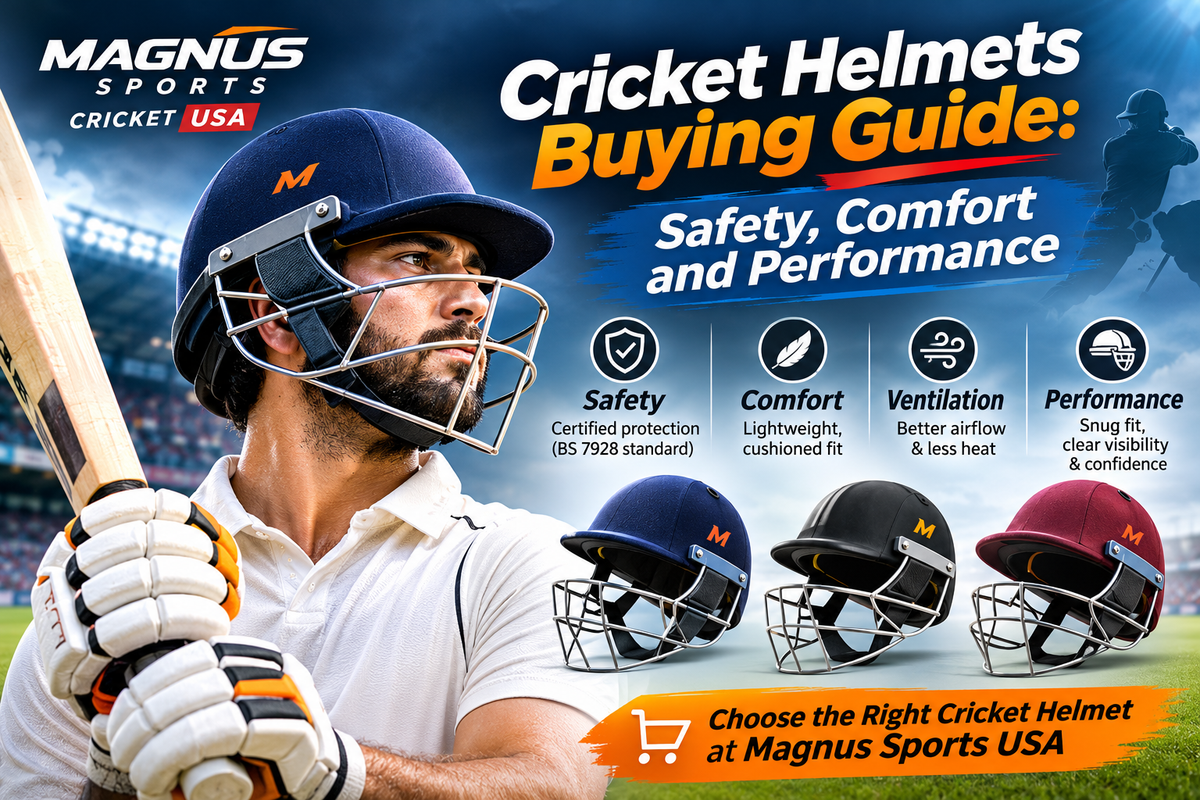
Introduction: Why Every Cricketer Needs a Quality Cricket Helmet
Cricket is a game of skill, technique, and quick decision-making. However, facing fast bowlers and unpredictable deliveries also involves significant risks. Whether you are playing competitive league cricket, club cricket, weekend matches, or practising in the nets, protecting your head should always be a priority.
A quality cricket helmet is one of the most important pieces of protective equipment for any batter. It helps protect the head and face from potential injuries caused by fast deliveries, accidental deflections, and unexpected impacts.
For cricket enthusiasts across the United States, choosing the right helmet can make a significant difference in safety, comfort, and confidence at the crease.
At Magnus Sports, we understand that the right cricket equipment contributes to a better playing experience. This guide will help you understand what to look for when buying a cricket helmet.
1. Understand Cricket Helmet Safety Standards
Safety should always be your first consideration when purchasing a cricket helmet.
A cricket helmet is designed to provide protection against impacts from cricket balls, but not all helmets offer the same level of protection.
Before purchasing, consider the following:
-
Look for helmets manufactured and tested to recognised cricket helmet safety standards.
-
Check compliance with the relevant British Standard BS 7928, including its applicable edition.
-
Ensure the helmet includes an appropriately designed protective grille.
-
Check the quality of the shell, internal padding, and fastening system.
-
Follow the manufacturer's instructions regarding fitting, maintenance, and replacement.
The grille should provide suitable protection to the face while maintaining adequate visibility.
Pro Tip: Never choose a cricket helmet based on appearance or price alone. Prioritise verified safety compliance and a secure fit.
2. Choose the Right Helmet Size and Fit
Even a high-quality cricket helmet may not provide adequate protection if it does not fit properly.
A helmet should sit comfortably on your head without excessive movement. It should not slide forward, backward, or sideways when you move.
Consider these fitting tips:
-
Measure your head circumference according to the manufacturer's sizing instructions.
-
Choose the correct size based on the brand's size chart.
-
Ensure the helmet sits securely without creating uncomfortable pressure points.
-
Adjust the chin strap for a secure fit.
-
Check that the grille is positioned correctly in relation to your face.
For younger players, choosing a properly sized junior cricket helmet is particularly important.
3. Check the Helmet Shell and Impact Protection
The outer shell is one of the most important components of a cricket helmet.
Modern cricket helmets use different materials and construction techniques to balance protection, durability, and weight.
When comparing helmets, look for:
-
A strong and durable outer shell.
-
Effective internal impact-absorbing padding.
-
Secure grille attachment points.
-
Quality finishing and reliable construction.
-
Appropriate protection around the forehead, temples, and sides of the head.
Remember that no cricket helmet can eliminate all injury risks. Always follow safe playing practices.
4. Select the Right Face Guard and Grille
The face grille plays an important role in cricket helmet protection.
It is designed to help protect the face from direct contact with the cricket ball while allowing the batter to maintain visibility.
When choosing a helmet, consider:
Grille Material: Check the manufacturer's specifications for material strength, durability, and construction quality.
Grille Adjustment: The grille should be positioned correctly and securely attached.
Visibility: Ensure that the grille does not unnecessarily obstruct your view of the bowler or the ball.
Compatibility: Use only approved replacement grilles and components designed for your specific helmet model.
A properly fitted grille can improve both confidence and comfort while batting.
5. Lightweight Design for Better Performance
Cricket requires concentration, balance, and quick reactions. Wearing an excessively heavy helmet can become uncomfortable during long batting sessions.
A lightweight helmet can help players maintain comfort and reduce unnecessary neck strain.
Look for helmets that offer:
-
Lightweight construction.
-
Balanced weight distribution.
-
Comfortable internal padding.
-
Secure and adjustable fitting.
-
Adequate ventilation.
Whether you are playing a T20 match or spending several hours in the batting nets, comfort can make a noticeable difference.
6. Ventilation and Internal Padding Matter
Cricket matches in the USA can involve different playing conditions, including hot summer afternoons and humid environments.
A well-ventilated helmet can improve airflow and help reduce heat buildup.
Pay attention to:
-
Ventilation openings.
-
Sweat-absorbing internal padding.
-
Soft and comfortable forehead cushioning.
-
Removable or replaceable padding, where supported.
-
Easy cleaning and maintenance.
A comfortable helmet allows players to focus on their batting rather than constantly adjusting their equipment.
7. Choose a Helmet According to Your Playing Level
Different players have different requirements when it comes to cricket helmets.
Here is a simple buying guide:
For Beginners
Choose a comfortable, properly sized helmet with verified safety compliance, secure fitting, and suitable face protection.
For Club and League Players
Look for durable construction, effective ventilation, adjustable fitting, and a reliable grille system.
For Advanced and Professional Players
Prioritise certified protection, precise fitting, comfort during extended sessions, and compatibility with the player's preferred equipment.
For Junior Cricketers
Always select a helmet specifically designed for the player's age and head size. Never compromise on fit to allow for future growth.
8. How to Maintain Your Cricket Helmet
Buying a good cricket helmet is only the first step. Proper maintenance is essential for keeping it in suitable condition.
Follow these simple maintenance practices:
-
Clean the outer shell with a soft cloth.
-
Allow internal padding to dry after use.
-
Store the helmet in a cool, dry place.
-
Regularly inspect the grille and attachment points.
-
Check the chin strap and fastening system before every match.
-
Avoid dropping, crushing, or exposing the helmet to excessive heat.
-
Replace the helmet after a significant impact or whenever the manufacturer recommends replacement.
Never continue using a helmet that has visible damage or may have suffered an impact that compromises its protective structure.
9. Common Mistakes to Avoid When Buying a Cricket Helmet
Many players make purchasing decisions based primarily on price or appearance. However, choosing the wrong helmet can compromise comfort and protection.
Avoid these common mistakes:
-
Buying a helmet without checking its safety certification.
-
Selecting the wrong size.
-
Ignoring grille quality and compatibility.
-
Choosing an uncomfortable or poorly ventilated design.
-
Purchasing used helmets with unknown impact history.
-
Ignoring manufacturer replacement recommendations.
A cricket helmet is an investment in your safety. Choose carefully.
10. Where to Buy Cricket Helmets Online in the USA?
Finding reliable cricket equipment in the United States is important for players who want quality products and convenient shopping.
Whether you are looking for a cricket helmet, batting gloves, leg guards, cricket bats, or other protective equipment, choosing a specialist cricket retailer can make the buying experience easier.
Magnus Sports is your destination for cricket equipment and accessories. Explore cricket gear designed to support players at different skill levels and help you prepare for every match.
From protective equipment to essential cricket accessories, discover products that complement your playing style.
Visit Magnus Sports to explore cricket equipment and find the right gear for your next innings.
Final Thoughts
A cricket helmet is much more than an accessory. It is an essential part of a batter's protective equipment.
The right helmet combines safety, comfort, visibility, ventilation, and a secure fit. Whether you are a beginner, a club cricketer, or an experienced player, investing in suitable protective equipment is one of the smartest decisions you can make.