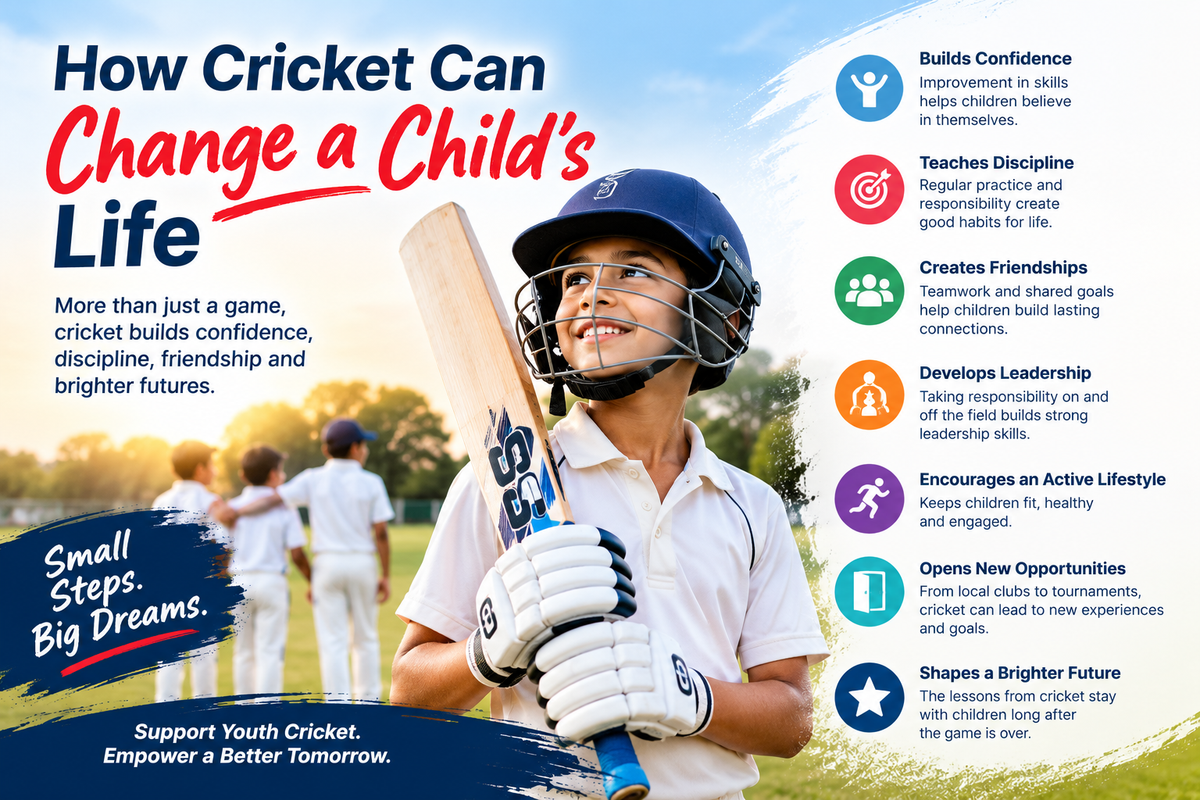
Cricket is more than a sport. For children, it can become a pathway to confidence, discipline, friendship, and personal growth. Across the United States, cricket is becoming increasingly accessible to young players through schools, clubs, community programs, and youth leagues. As the sport continues to grow, more children are discovering how much they can learn both on and off the field.
Building Confidence Through Practice
Every young cricketer starts somewhere. Learning to hold a bat, bowl accurately, catch a ball, or understand the game takes patience. With regular practice, children can see their skills improve over time.
That progress can create confidence. A child who once struggled to connect with the ball may eventually hit a powerful shot or contribute to a team victory. These experiences teach children that improvement comes through effort and persistence.
Teaching Discipline and Responsibility
Cricket encourages young players to develop good habits. Attending practice, caring for equipment, listening to coaches, and preparing for matches all require responsibility.
The sport also teaches children that success rarely happens instantly. Consistent training and commitment can make a difference, lessons that can carry into school, hobbies, and future goals.
Learning How to Handle Success and Failure
Cricket naturally creates moments of both achievement and disappointment. A player may score a half-century one weekend and be dismissed for a low score the next.
Learning to respond positively to both experiences is valuable. Cricket can help children understand that one mistake does not define them and that setbacks can become opportunities to learn.
Creating Friendships and Team Connections
Cricket brings children together. Players communicate, encourage one another, celebrate achievements, and work toward shared goals.
For children who are new to a community or looking for new friendships, joining a cricket team can provide a welcoming environment. Teamwork also teaches young players to appreciate different strengths and personalities.
Developing Leadership Skills
As children gain experience, cricket can give them opportunities to take responsibility. Captaining a team, helping younger players, making decisions during a match, or encouraging teammates can all develop leadership skills.
These experiences can help children become better communicators and more confident decision-makers.
Encouraging an Active Lifestyle
Regular cricket practice keeps children moving while giving them an activity they can enjoy with friends. Batting, bowling, fielding, running between wickets, and training sessions all contribute to physical activity.
Most importantly, children are more likely to stay engaged when physical activity is connected to something they genuinely enjoy.
Opening the Door to New Opportunities
Cricket can introduce children to communities and opportunities they may not otherwise encounter. Youth tournaments, school programs, coaching camps, clubs, and local leagues can help young players discover new goals.
For some children, cricket may eventually become a competitive pursuit. For others, it may simply remain a lifelong passion. Both paths can provide meaningful experiences.
Cricket Can Shape More Than a Player
The greatest impact of cricket may not be measured by runs, wickets, or trophies. It can be seen in a child's growing confidence, stronger friendships, willingness to work hard, and ability to deal with challenges.
For parents and communities across the USA, supporting youth cricket means giving children another opportunity to learn, grow, and dream. Whether a child hopes to become a competitive cricketer or simply wants to enjoy the game with friends, the lessons learned through cricket can stay with them long after they leave the field.