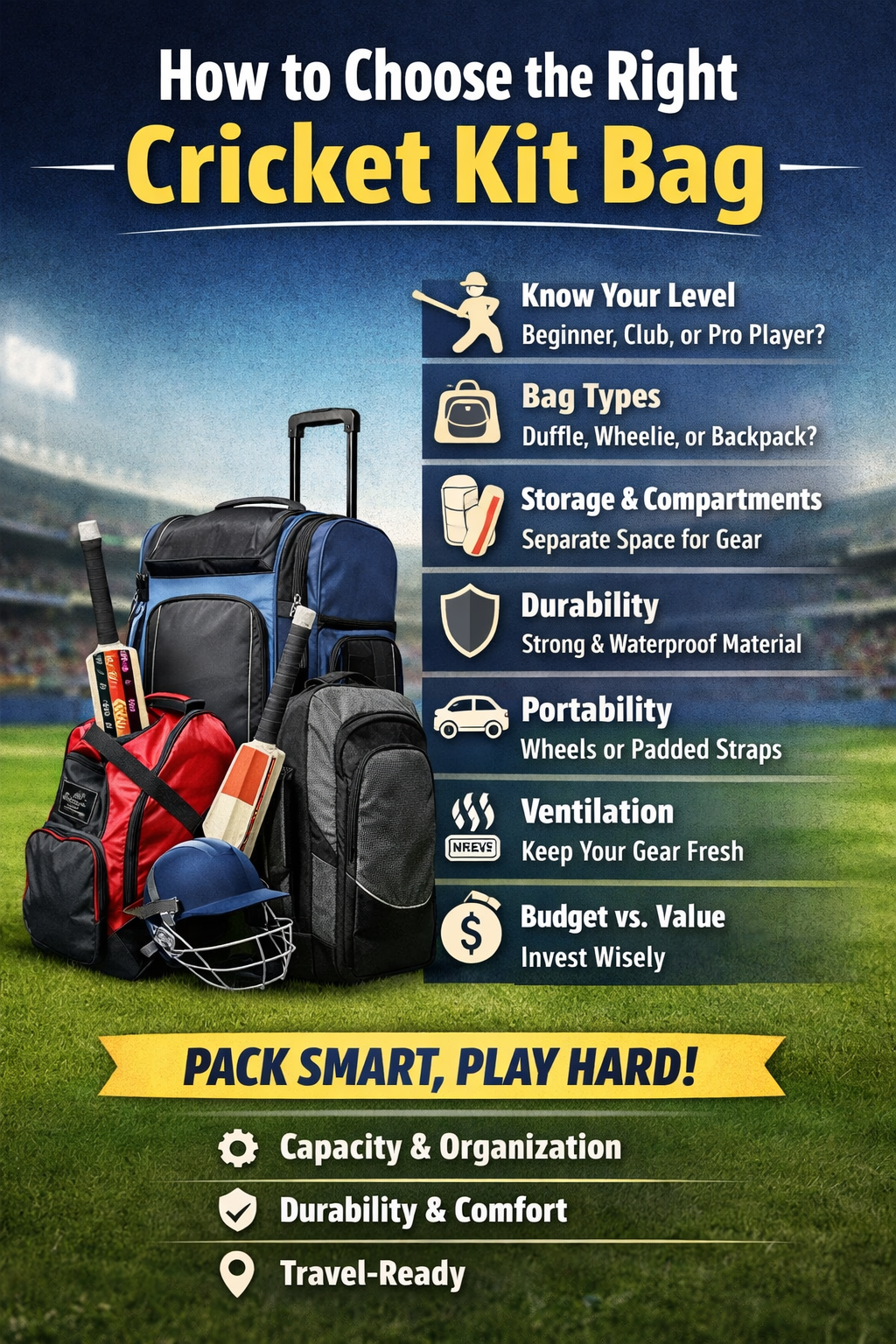
How to Choose the Right Cricket Kit Bag (USA Guide)
Choosing the right cricket kit bag isn’t just about carrying your gear—it’s about convenience, protection, and staying organized on match day. Whether you're a beginner खिलाड़ी or a competitive player in the growing U.S. cricket scene, the right bag can make a big difference.
1. Understand Your Playing Level
Your level of play should guide your choice:
- Beginner / Casual Players: A compact duffle bag works well for basic gear.
- Club / League Players: Look for medium-to-large bags with multiple compartments.
- Professional Players: Opt for large wheelie bags that can carry full kits including multiple bats and helmets.
2. Types of Cricket Kit Bags
There are several styles available, each suited to different needs:
- Duffle Bags: Lightweight and easy to carry, ideal for practice sessions.
- Wheelie Bags: Equipped with wheels for easy transport—perfect for players carrying heavy gear.
- Backpack Style Bags: Compact and comfortable, great for juniors or minimal gear.
Brands like SG, Kookaburra, and Gray-Nicolls offer a wide range of options tailored to different playing needs.
3. Storage Capacity & Compartments
A good cricket bag should keep your equipment organized:
- Separate sections for bats, pads, gloves, and helmet
- Dedicated shoe compartment (preferably ventilated)
- Smaller pockets for accessories like grips, balls, and personal items
If you’re carrying multiple bats or extra gear, always size up.
4. Durability Matters
Cricket gear can be heavy and bulky, so your bag needs to handle the load:
- Look for heavy-duty polyester or nylon materials
- Reinforced stitching and strong zippers
- Waterproof or water-resistant base for outdoor conditions
This is especially important for U.S. players traveling between grounds or dealing with varied weather.
5. Portability & Comfort
In the U.S., players often travel longer distances to games, so ease of transport is key:
- Wheels + sturdy handle for large kits
- Padded shoulder straps for duffle/backpack styles
- Balanced weight distribution to avoid strain
6. Ventilation & Hygiene
After long matches, sweaty gear can cause odor and damage:
- Choose bags with ventilated compartments
- Mesh panels help airflow and keep gear fresh
7. Budget vs Value
You don’t need the most expensive bag—but don’t go too cheap either:
- Entry-level bags are great for beginners
- Mid-range bags offer better durability and features
- Premium bags provide maximum space, comfort, and longevity
Think of it as an investment in protecting your gear.
🇺🇸 8. Consider U.S. Playing Conditions
Cricket in the United States often involves:
- Traveling by car → wheelie bags are a big advantage
- Playing on turf & matting wickets → extra shoes and gear
- Limited storage at grounds → organized bags help a lot
Final Thoughts
The right cricket kit bag should match your playing level, gear quantity, and travel needs. Focus on capacity, durability, and comfort rather than just style.
A well-chosen bag keeps your equipment safe, your routine organized, and your focus where it belongs—on the game.