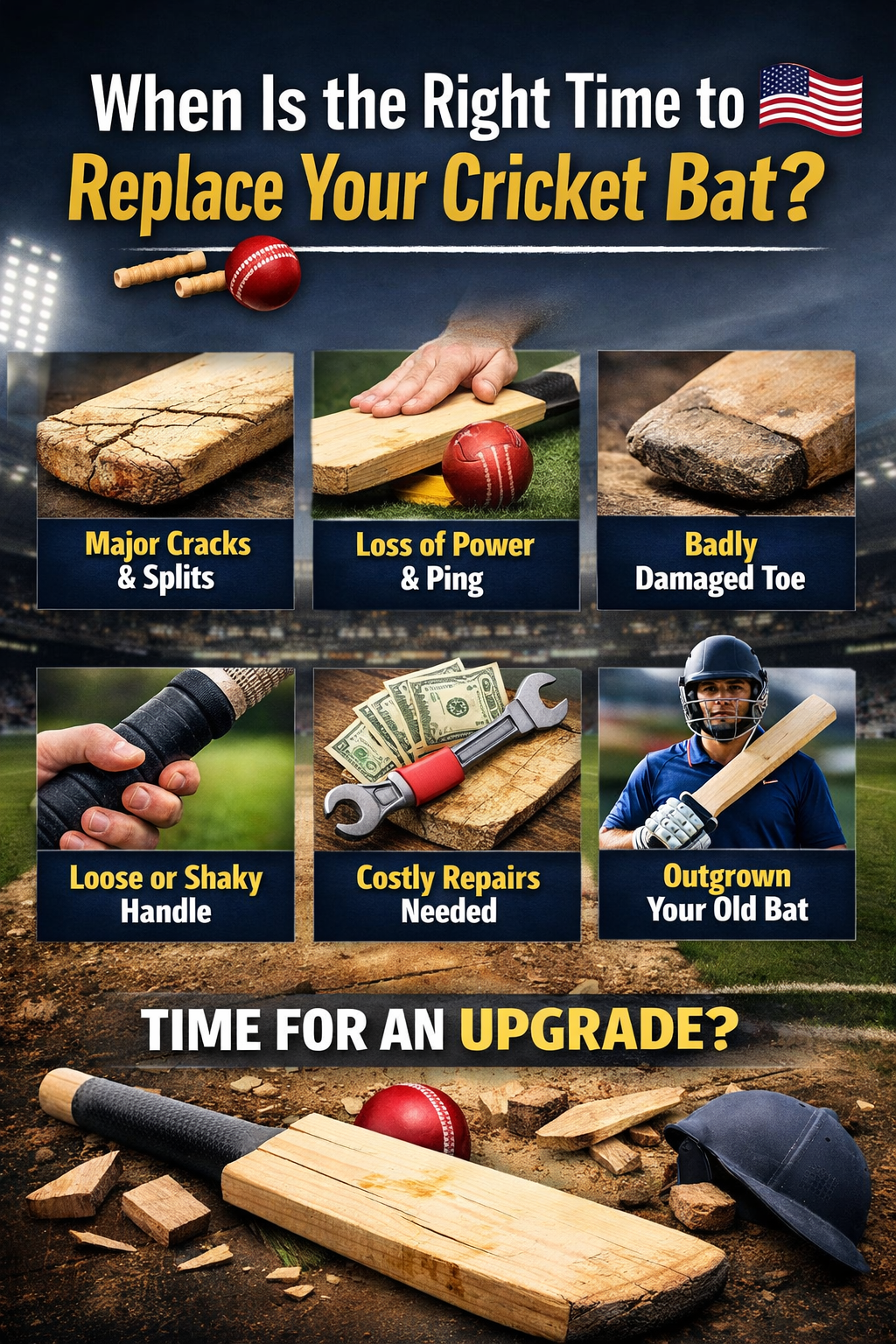
When Is the Right Time to Replace Your Cricket Bat? 🇺🇸
Your cricket bat is your most important piece of equipment. Whether you’re playing club cricket in California, league matches in Texas, or weekend games in New Jersey, knowing when to replace your cricket bat can make a huge difference in performance and safety.
Many players in the USA hold on to their bats too long — often at the cost of runs. Here’s how to know when it’s time for an upgrade.
Visible Cracks That Keep Growing
Small surface cracks are normal, especially with English willow bats. But if you notice:
-
Deep cracks along the edges
-
Splits running through the toe
-
Cracks spreading across the face
-
Pieces of willow lifting
…it may be time to replace it.
Minor cracks can be repaired, but structural cracks affect performance and safety — especially when facing fast bowlers on hard American turf wickets.
Loss of “Ping” and Power
One of the biggest signs your bat is aging? The ball doesn’t travel like it used to.
If you feel:
-
Less rebound off the middle
-
Dull sound on contact
-
Needing extra effort for boundaries
The internal fibers of the willow may be compressed beyond recovery. Even after knocking-in and oiling, older bats can lose their natural spring.
For competitive USA league cricket, that loss of power can cost you crucial runs.
Excessive Toe Damage
Many American grounds have harder pitches and synthetic surfaces. Over time, yorkers and low deliveries can damage the toe.
Watch for:
-
Severe toe swelling
-
Splitting at the bottom
-
Water damage from damp outfields
Once the toe structure weakens significantly, performance drops quickly.
Handle Feels Loose or Vibrates Excessively
If you notice:
-
The handle twisting
-
Increased vibration
-
A rattling sound
The internal binding may be compromised. While some handle repairs are possible, major structural instability often means it’s time for a replacement.
You’ve Outgrown the Bat
Sometimes the issue isn’t damage — it’s development.
You may need a new bat if:
-
You’ve moved from junior to adult cricket
-
Your strength and playing style have changed
-
You’re switching formats (T20 vs longer formats)
As USA cricket continues to grow with events like the ICC Men's T20 World Cup, more players are upgrading equipment to match higher competition standards.
Repairs Cost More Than the Bat Is Worth
If your bat needs:
-
Extensive edge repair
-
Full handle replacement
-
Deep crack restoration
Compare repair costs to buying a new bat. Sometimes investing in a fresh blade gives better long-term value and performance.
How Long Should a Cricket Bat Last?
For active USA league players:
-
2–3 seasons with regular use
-
Longer with proper maintenance
-
Less if used heavily on synthetic wickets
Proper knocking-in, oiling, toe guards, and anti-scuff sheets can significantly extend lifespan.
Signs You Can Still Keep It
You don’t need a new bat if:
✔ Only minor surface cracks
✔ Strong ping remains
✔ No structural instability
✔ Performance still feels solid
Maintenance can revive many bats — but only to a point.
Final Thoughts
Replacing your cricket bat isn’t just about damage — it’s about performance, confidence, and staying competitive.
If your bat no longer delivers the power, balance, or feel you need, it might be time to upgrade. With cricket rapidly expanding across the United States, having reliable, high-quality equipment matters more than ever.
A new bat isn’t just gear — it’s an investment in your next big innings.