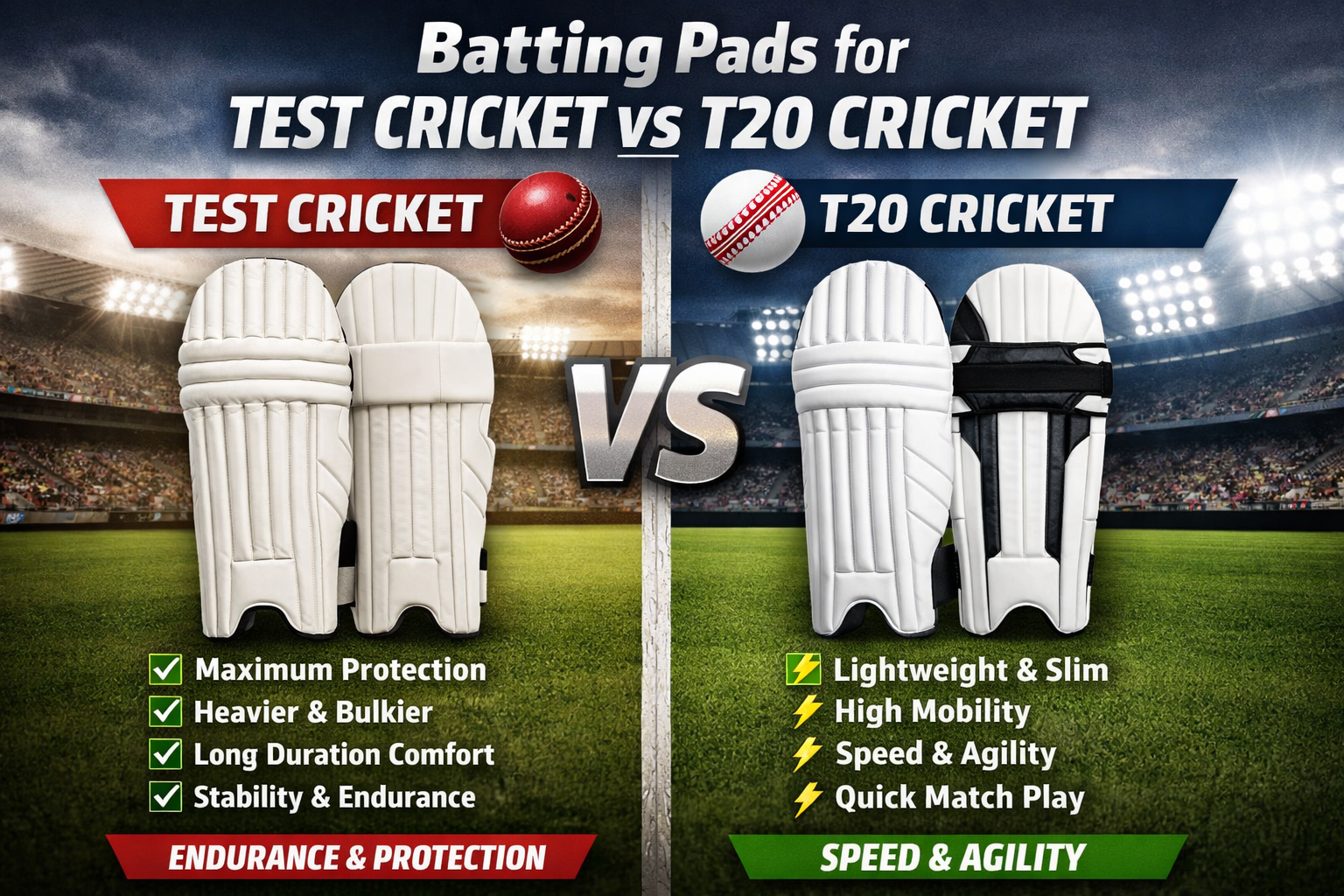
Cricket in the USA is growing rapidly, with players embracing both traditional long-format matches and fast-paced T20 leagues. While skills and strategies differ between formats, one often overlooked factor is choosing the right batting pads.
Whether you're grinding through a full-day match or smashing quick runs in a T20 game, your pads play a crucial role in performance, comfort, and protection.
Understanding the Role of Batting Pads
Batting pads are designed to protect a player’s legs—especially the knees, shins, and ankles—from high-speed deliveries. But not all pads are built the same. The demands of Test cricket and T20 cricket require different features.
Batting Pads for Test Cricket
Test cricket is the ultimate test of endurance, patience, and technique. Matches can last multiple days, and batters often spend hours at the crease.
🔹 Key Features
1. Maximum Protection
Test cricket pads are heavily padded to absorb impact from fast bowlers. Thick cane rods and reinforced knee rolls are standard.
2. Traditional Design
These pads tend to be bulkier, offering full coverage from ankle to thigh.
3. Long-Lasting Comfort
Since players wear them for extended periods, they include soft inner linings and breathable materials.
4. Stability Over Speed
Weight is less of a concern. Stability and protection take priority over agility.
Best For:
- Red-ball cricket
- Defensive batting styles
- Players facing fast or swing bowling for long durations
Batting Pads for T20 Cricket
T20 cricket is fast, aggressive, and all about quick movement. Players need gear that supports explosive batting and rapid running between wickets.
Key Features
1. Lightweight Construction
T20 pads are significantly lighter, helping players move quickly and react faster.
2. Slim Profile
A more compact design improves mobility and reduces bulk.
3. Flexibility & Comfort
Modern materials like high-density foam provide protection without adding weight.
4. Speed-Focused Design
Designed for quick singles, powerful shots, and dynamic footwork.
Best For:
- White-ball cricket
- Aggressive stroke play
- Players prioritizing speed and agility
Key Differences at a Glance
| Feature | Test Cricket Pads | T20 Cricket Pads |
|---|---|---|
| Protection | Maximum | Moderate to High |
| Weight | Heavier | Lightweight |
| Design | Traditional & bulky | Slim & modern |
| Mobility | Moderate | High |
| Usage Duration | Long sessions | Short, intense bursts |
🇺🇸 Choosing the Right Pads in the USA
With cricket expanding across cities like New York, Texas, and California, players often participate in multiple formats. If you’re playing both:
Consider owning two pairs of pads
Or choose hybrid pads that balance protection and mobility
For beginners in the USA, lightweight pads are often a good starting point, especially for league and recreational T20 matches.
Final Thoughts
The difference between Test and T20 batting pads comes down to protection vs performance speed.
- If you value endurance and safety → go for Test-style pads
- If you prioritize agility and quick play → choose T20 pads
Investing in the right gear not only improves your performance but also keeps you safe on the field.