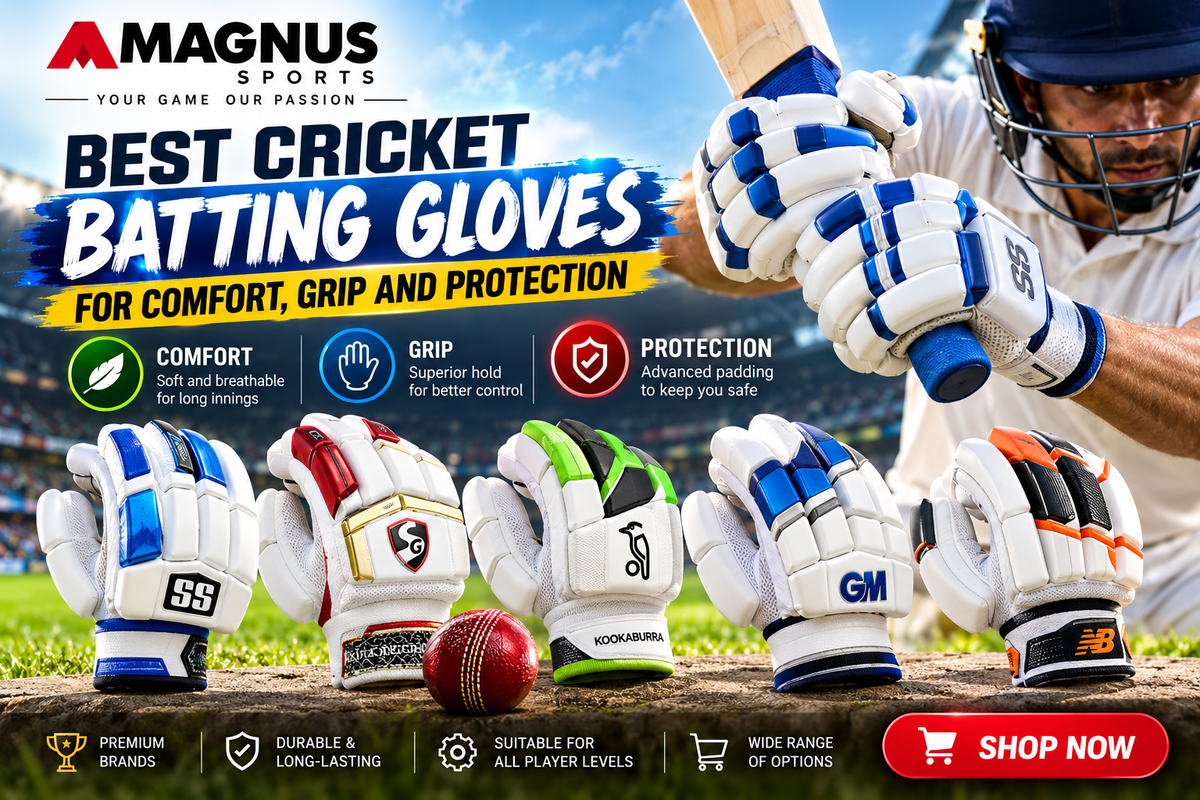
Cricket is a game of skill, timing, and precision. Whether you're playing in a local cricket league, competing in a weekend tournament, or practicing in the nets, having the right equipment can make a significant difference in your performance. Among all cricket accessories, batting gloves are particularly important because they help protect your hands while providing the grip and comfort needed to play confidently.
For cricket players across the United States, choosing the right batting gloves is essential. From hard-ball cricket leagues to recreational matches, the right pair can help you maintain control of your bat, reduce discomfort, and improve your overall playing experience.
At Magnus Sports, cricket enthusiasts can explore quality cricket equipment designed to support their passion for the game. In this guide, we'll explain how to choose the best cricket batting gloves for comfort, grip, and protection.
Why Are Cricket Batting Gloves Important?
Batting gloves are more than just another piece of cricket equipment. They serve several important purposes that can affect your comfort and confidence at the crease.
1. Protection Against Impact
In hard-ball cricket, a fast delivery can strike your fingers or hands with considerable force. Batting gloves incorporate protective materials and padding to help reduce the risk of injury.
Depending on the model, protection may include:
-
Padded finger sections.
-
Reinforced protection for vulnerable fingers.
-
Protective materials around the thumb.
-
Flexible padding that supports natural hand movement.
The level of protection varies between models, so players should select gloves appropriate for their competition level and playing conditions.
Tip: If you regularly face fast bowlers, prioritize batting gloves with well-designed finger and thumb protection.
2. Better Grip and Bat Control
A secure grip helps you control your bat when playing defensive strokes, driving through the covers, or attempting powerful shots.
Quality batting gloves typically feature textured palms made from leather or synthetic materials. These surfaces help maintain contact between your hands and the bat handle.
When choosing gloves, look for:
-
A palm material that feels secure and comfortable.
-
Adequate flexibility around the fingers.
-
A snug fit without excessive tightness.
-
Materials that perform well when your hands become warm or sweaty.
A good grip can support consistent bat control, although batting technique and proper hand positioning remain equally important.
3. Comfort During Long Innings
Cricket matches can last several hours, making comfort an important consideration.
Poorly fitting gloves may cause discomfort, restrict movement, or contribute to blisters during extended batting sessions.
Look for gloves with breathable materials, flexible finger sections, and a comfortable inner lining. The wrist closure should also provide a secure fit without restricting circulation or movement.
For players who practice frequently, comfort and durability should be considered alongside protection.
Types of Cricket Batting Gloves
Different players have different requirements. Understanding the main types of batting gloves can help you make a more informed purchase.
1. Traditional Cricket Batting Gloves
Traditional batting gloves are designed for hard-ball cricket and generally include padded fingers, a protective thumb section, and a palm designed for grip.
They are suitable for club players, competitive cricketers, and recreational players who regularly participate in hard-ball matches.
When selecting traditional gloves, compare the protection, flexibility, palm material, and overall fit.
2. Lightweight Batting Gloves
Lightweight gloves are designed to provide a less bulky feel while allowing natural finger movement.
They may appeal to players who prioritize flexibility and comfort during batting practice or competitive matches.
However, lightweight construction should not automatically be interpreted as superior performance. Check the protective features carefully to ensure the gloves meet your needs.
3. Premium Leather-Palm Gloves
Some batting gloves feature leather palms designed to provide a comfortable feel and dependable contact with the bat handle.
Leather can be a good option for players who value traditional construction and a natural grip.
The quality of the leather, stitching, padding, and maintenance requirements can vary considerably between products.
4. Youth Cricket Batting Gloves
Young cricketers need gloves that fit their hands properly while providing suitable protection.
Oversized gloves can make it difficult to hold the bat securely, while undersized gloves may restrict movement.
When buying gloves for younger players, prioritize correct sizing, comfortable padding, and appropriate finger protection rather than choosing a larger pair simply to accommodate future growth.
How to Choose the Best Cricket Batting Gloves
Before purchasing batting gloves, consider these five essential factors.
1. Choose the Correct Size
Proper sizing is one of the most important aspects of selecting batting gloves.
Gloves should fit securely without pinching your fingers or restricting movement. Your fingertips should sit comfortably within the protective sections, and the wrist closure should remain secure during batting.
Manufacturers may use different sizing charts, so check the specific brand's measurements before ordering online.
Buying tip for USA customers: Review the seller's sizing guide and return policy before purchasing. If you're between sizes, consult the manufacturer's recommendations rather than assuming that every brand fits the same way.
2. Evaluate the Protection
Not all batting gloves offer the same level of protection.
Players facing fast bowling may prefer models with additional finger protection and reinforced thumb sections. Recreational players should also ensure their gloves are appropriate for the type of cricket ball they use.
Pay attention to the quality and positioning of the padding, particularly around the fingers and thumb.
Remember that batting gloves reduce some impact risks but cannot eliminate the possibility of injury.
3. Check the Palm Material
The palm material affects grip, comfort, durability, and maintenance.
Common options include:
-
Leather: Often valued for its natural feel and grip.
-
Synthetic materials: May offer easier maintenance and different price points.
-
Hybrid construction: Combines different materials to balance comfort, grip, and durability.
The best option depends on your preferences, how frequently you play, and your budget.
4. Look for Breathability
During summer cricket in the United States, heat and humidity can make batting uncomfortable.
Breathable fabrics and ventilation panels may help improve comfort during long practice sessions and matches.
If you frequently play in warm conditions, look for gloves designed to manage moisture while maintaining a secure fit.
5. Consider Durability and Value
The most expensive gloves are not necessarily the best choice for every player.
Instead, evaluate the materials, stitching, palm construction, protective features, and expected frequency of use.
Competitive players who train several times a week may benefit from investing in a durable pair. Beginners may prefer an affordable option that provides a comfortable fit and suitable protection.
Which Batting Gloves Are Best for Different Types of Players?
Your playing style and experience level should influence your decision.
| Player Type | What to Prioritize |
|---|---|
| Beginner cricketers | Comfortable fit, basic protection, and value |
| Club-level players | Reliable grip, finger protection, and durability |
| Competitive players | Advanced protective features, fit, and flexibility |
| Power hitters | Secure grip, thumb protection, and comfortable padding |
| Young players | Correct sizing, lightweight feel, and appropriate protection |
| Frequent practice players | Breathability, durability, and long-term comfort |
These are general recommendations. The right choice will also depend on your hand size, batting technique, playing conditions, and the requirements of your competition.
How to Maintain Your Cricket Batting Gloves
Proper maintenance can help extend the life of your batting gloves and preserve their comfort.
Allow Gloves to Dry Naturally
After a match, remove your gloves from your cricket bag and allow them to air-dry in a well-ventilated area.
Avoid leaving damp gloves inside a closed bag for extended periods.
Avoid Excessive Heat
Do not place your gloves directly on a radiator or use intense heat to dry them. Excessive heat can damage leather, synthetic materials, and adhesives.
Clean Them Carefully
Follow the manufacturer's cleaning instructions. Avoid soaking leather-palm gloves unless the manufacturer specifically permits it.
A soft, dry cloth can help remove surface dirt after use.
Inspect the Padding Regularly
Check the fingers, thumb, stitching, and palm for visible damage.
If the padding becomes damaged or the protective sections no longer remain in place, replace the gloves before continuing to use them in hard-ball cricket.
Store Them Properly
Keep your gloves in a cool, dry location away from direct sunlight and excessive moisture.
Using a breathable storage bag can help prevent unpleasant odors and allow the materials to dry between sessions.
Common Mistakes to Avoid When Buying Batting Gloves
Even experienced cricketers can make mistakes when choosing protective equipment.
Avoid these common problems:
Buying the wrong size: Gloves that are too large can compromise control, while tight gloves may restrict movement.
Choosing appearance over protection: Attractive colors and designs are useful for personal style, but fit and protective construction should come first.
Ignoring the thumb section: Thumb protection is an important consideration, particularly for players who regularly face fast bowling.
Assuming all gloves are identical: Materials, padding, sizing, and construction vary across brands and models.
Neglecting maintenance: Dampness, worn stitching, and damaged padding can reduce comfort and compromise protective performance.
Ignoring the return policy: When shopping online, check whether the seller permits returns or exchanges for incorrectly sized equipment.
Where to Buy Cricket Batting Gloves in the USA
Finding suitable cricket equipment in the United States is becoming increasingly important as the sport continues to attract players across different communities.
Whether you're preparing for a local league, upgrading your existing kit, or purchasing equipment for a young cricketer, choosing a reliable cricket retailer can simplify the process.
Magnus Sports offers cricket enthusiasts an online destination to explore cricket equipment and accessories.
When shopping for batting gloves, compare the available options based on:
-
Size and fit.
-
Finger and thumb protection.
-
Palm material and grip.
-
Breathability and comfort.
-
Price and durability.
-
Shipping, returns, and exchange policies.
Before ordering, review the product specifications carefully to ensure the gloves are appropriate for your playing requirements.
Explore the available cricket equipment at Magnus Sports and find gear that complements your game.
Final Thoughts
The best cricket batting gloves are those that combine a secure grip, comfortable fit, appropriate protection, and durable construction.
For beginners, comfort and correct sizing should be the starting point. Club and competitive players may need additional protective features and materials suited to frequent use. Young cricketers should choose properly fitted gloves that support natural hand movement without compromising protection.
For cricket enthusiasts across the USA, taking the time to compare materials, fit, and protective features can make purchasing cricket equipment easier and more rewarding.
Ready to upgrade your cricket gear? Explore Magnus Sports and prepare for your next innings with confidence.
Frequently Asked Questions (FAQs)
1. What are the best cricket batting gloves for beginners?
Beginners should look for comfortable, correctly sized gloves with suitable finger and thumb protection, a secure palm grip, and durable construction.
2. Are leather batting gloves better than synthetic gloves?
Not necessarily. Leather palms are often valued for their natural feel, while synthetic materials may offer different maintenance requirements and price points. The best choice depends on fit, construction, and personal preference.
3. How tight should cricket batting gloves fit?
Batting gloves should fit securely without squeezing the fingers or restricting movement. Your fingertips should sit comfortably inside the protective sections.
4. How often should I replace my batting gloves?
Replacement depends on usage, maintenance, and wear. Inspect the palm, stitching, fingers, and thumb regularly, and replace gloves when their protective padding or structural integrity deteriorates.
5. Can I use the same batting gloves for practice and matches?
Yes, provided the gloves fit correctly, offer appropriate protection, and remain in good condition. Players who practice frequently may prefer a separate practice pair to reduce wear on their match gloves.
6. What should I look for in batting gloves for hard-ball cricket?
Prioritize appropriate finger and thumb protection, a secure fit, reliable grip, and durable construction. No batting glove can eliminate all injury risks.