Introduction: Getting Your Child Started with Cricket
Cricket is becoming an exciting sporting option for families across the United States. From local youth leagues and school programs to backyard practice sessions, the game offers children an opportunity to develop coordination, teamwork, concentration, and confidence.
If your child is showing an interest in cricket, choosing the right equipment is an important first step. However, with different bat sizes, protective gear, brands, and price ranges available, buying cricket equipment for kids can feel confusing for parents who are new to the sport.
The good news is that you do not need to purchase every piece of professional equipment immediately. The right starter gear depends on your child's age, height, experience, playing format, and the type of cricket they intend to play.
This guide explains everything parents in the USA need to know before purchasing cricket equipment for their young players.
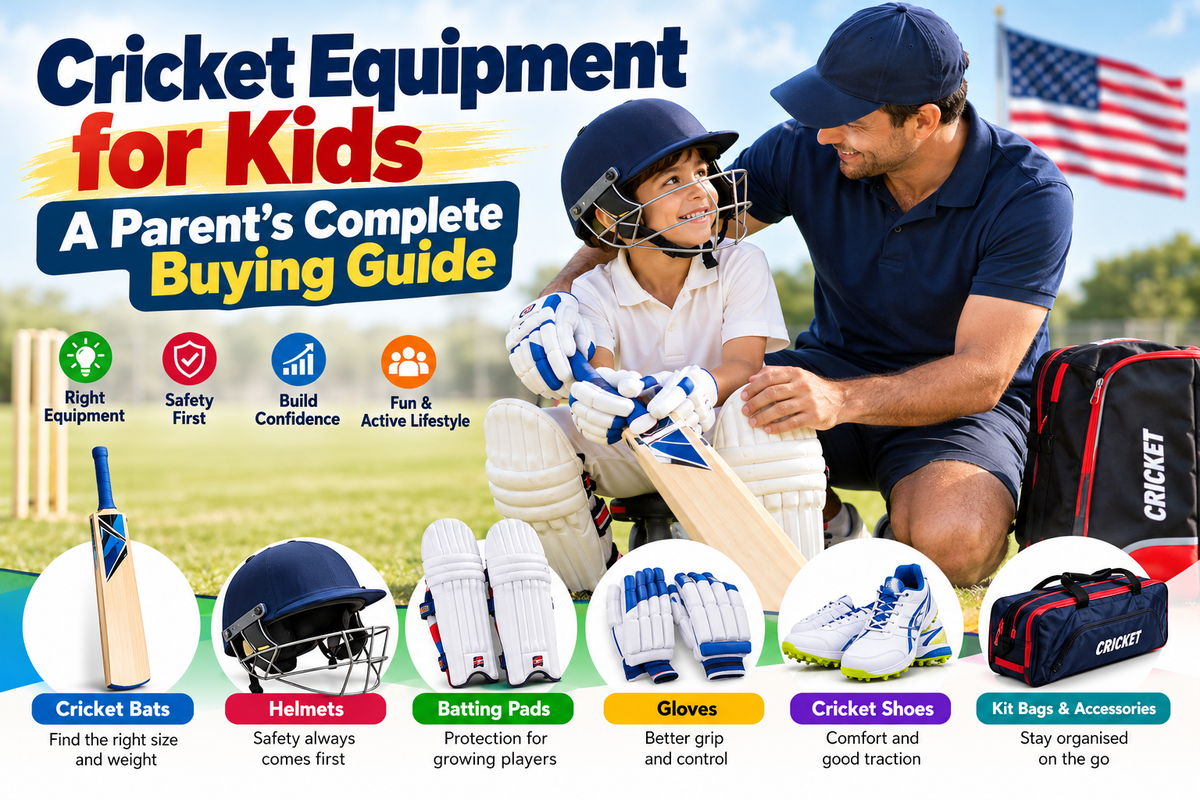
1. Choose the Right Cricket Bat for Your Child
<image-placeholder>
A cricket bat is often the first item children want when they start playing. Selecting the correct size is essential because a bat that is too heavy or too long can make it difficult for a child to play shots comfortably and maintain proper technique.
How to select a junior cricket bat
Consider the following factors before buying:
-
Height and reach: Choose a bat that your child can lift and control comfortably.
-
Weight: A lighter bat may help beginners develop their swing and batting technique.
-
Bat size: Junior bats commonly come in sizes 0, 1, 2, 3, 4, 5, 6, Harrow, and full size, depending on the manufacturer.
-
Bat material: English willow and Kashmir willow are common choices, with differences in price, performance, and feel.
-
Playing level: A basic training bat may be suitable for casual play, while regular league players may benefit from a better-quality bat suited to their needs.
Junior cricket bat size guide
| Bat Size | General Recommendation |
|---|---|
| Size 0–1 | Smaller children and early beginners |
| Size 2–3 | Younger junior players |
| Size 4–5 | Growing children |
| Size 6 | Taller junior players |
| Harrow | Many older or taller junior players |
| Full Size | Usually older teens and adults, depending on height and strength |
These categories are approximate. Children's heights and bat dimensions vary, so always check the manufacturer's sizing chart and let your child test the bat's balance and weight when possible.
Parent's tip: Ask your child to hold the bat with a comfortable grip and make a few controlled swings. If they struggle to lift it, keep losing control, or find it difficult to move the bat naturally, consider a lighter or smaller option.
2. Never Compromise on a Proper Cricket Helmet
A cricket ball can travel at high speed, making head protection essential during batting and wicketkeeping practice when appropriate.
A well-fitting helmet should be a priority whenever the activity and ball type require head protection.
Look for these features:
-
A secure, adjustable fit that does not move excessively.
-
A protective grille or faceguard designed for cricket.
-
Clear visibility without obstructing the child's view.
-
A comfortable chin strap that can be fastened correctly.
-
Appropriate sizing and compliance with the relevant cricket competition's safety requirements.
Do not buy an adult helmet simply because your child may grow into it. A helmet that is too large may not provide the intended protection.
Parents should also inspect helmets regularly for cracks, damaged grilles, loose fittings, or other signs of wear. Follow the manufacturer's instructions for replacement after significant impacts.
3. Cricket Batting Pads: Protecting Young Legs
Batting pads protect the lower legs and knees from cricket-ball impacts. They are particularly important when children begin facing harder balls during organized training or matches.
When choosing junior batting pads, consider:
-
Correct length: The pads should cover the intended areas without restricting movement.
-
Comfort: Soft inner lining and suitable padding can make long practice sessions easier.
-
Secure straps: The pads should stay in place while running and batting.
-
Weight: Lightweight junior designs can help children move more freely.
-
Compatibility: Choose equipment appropriate for the ball type and playing conditions.
Pads should fit securely without cutting off circulation or slipping around the legs. Encourage your child to walk, bend their knees, and take a batting stance while wearing them before you make a purchase.
4. Cricket Batting Gloves for a Secure Grip
Children need gloves that protect their hands while allowing them to hold and control the bat comfortably.
When shopping for kids' cricket gloves, look for:
-
Finger protection suitable for the intended level of play.
-
A comfortable fit with enough flexibility to grip the handle.
-
Breathable materials for warm-weather practice.
-
Secure wrist closures.
-
A junior size that matches your child's hand measurements.
Avoid gloves that are so large that the fingers move excessively inside them. Gloves that are too tight can also affect comfort and grip.
For young beginners using soft training balls, basic training gloves may be sufficient. For hard-ball cricket, choose proper batting gloves with suitable protective construction.
5. Cricket Shoes: Finding the Right Footwear
The right footwear helps children move confidently, maintain balance, and change direction safely on the field.
The best option depends on the surface where your child will play.
For artificial turf and indoor facilities: Look for shoes designed to provide suitable traction on the particular surface.
For grass pitches: Cricket shoes with appropriate studs may provide useful grip, depending on ground conditions and league rules.
For general practice: Comfortable athletic shoes may be acceptable for some introductory activities, but they should provide stable footing and appropriate traction.
Before buying cricket shoes, check the fit, toe room, heel support, and sole design. Avoid footwear with excessive grip or an unsuitable sole for the playing surface.
6. Cricket Clothing and Essential Accessories
Your child does not need an expensive professional uniform to begin playing. Start with comfortable clothing that allows unrestricted movement.
Useful items include:
-
Cricket trousers or suitable sports pants.
-
A breathable sports shirt or team jersey.
-
Cricket socks.
-
A protective abdominal guard, often called a box, where appropriate for the activity.
-
A cricket equipment bag.
-
A water bottle and towel.
-
A cap or sun protection for outdoor sessions.
For organized matches, check the league's uniform and equipment rules before purchasing team clothing.
A cricket bag is particularly useful once your child begins carrying a bat, pads, gloves, helmet, shoes, and other accessories to practice.
7. Should You Buy a Cricket Starter Kit for Kids?
A junior cricket starter kit can be a practical option for parents who want to purchase several essential items together.
Depending on the manufacturer and package, a kit may include a junior bat, batting pads, gloves, and a bag. Some packages may also contain additional accessories.
Before choosing a kit, confirm exactly what is included. Helmets, abdominal guards, shoes, and other protective items may need to be purchased separately.
Starter kit vs. individual equipment
| Buying Option | Best For | Main Consideration |
|---|---|---|
| Starter kit | Beginners and families buying several items | Check sizes and included equipment |
| Individual items | Children with specific fit or performance needs | May require more time to compare products |
| Upgraded equipment | Regular club and league players | Match the investment to playing frequency |
A starter kit can simplify shopping, but only if every included item fits your child correctly. Do not compromise on helmet fit or essential protective equipment to save money.
8. How Much Should Parents in the USA Budget for Kids' Cricket Gear?
The cost of children's cricket equipment varies depending on the brand, materials, product quality, and whether you buy individual items or a complete kit.
The following figures are illustrative shopping budgets in US dollars, not verified current retail prices.
| Equipment | Illustrative Budget |
|---|---|
| Junior cricket bat | $25–$100+ |
| Batting gloves | $15–$50+ |
| Batting pads | $25–$70+ |
| Cricket helmet | $35–$100+ |
| Cricket shoes | $35–$100+ |
| Junior starter kit | $75–$200+ |
A complete setup can cost more if you select premium equipment or need specialist footwear and additional protective gear.
Money-saving tip: If your child is just beginning, prioritize correctly fitted essential equipment. You can upgrade the bat or other items as their skills, confidence, and commitment to the sport develop. Check local club equipment-loan programs and secondhand options, but inspect used protective gear carefully and avoid equipment with unknown impact damage.