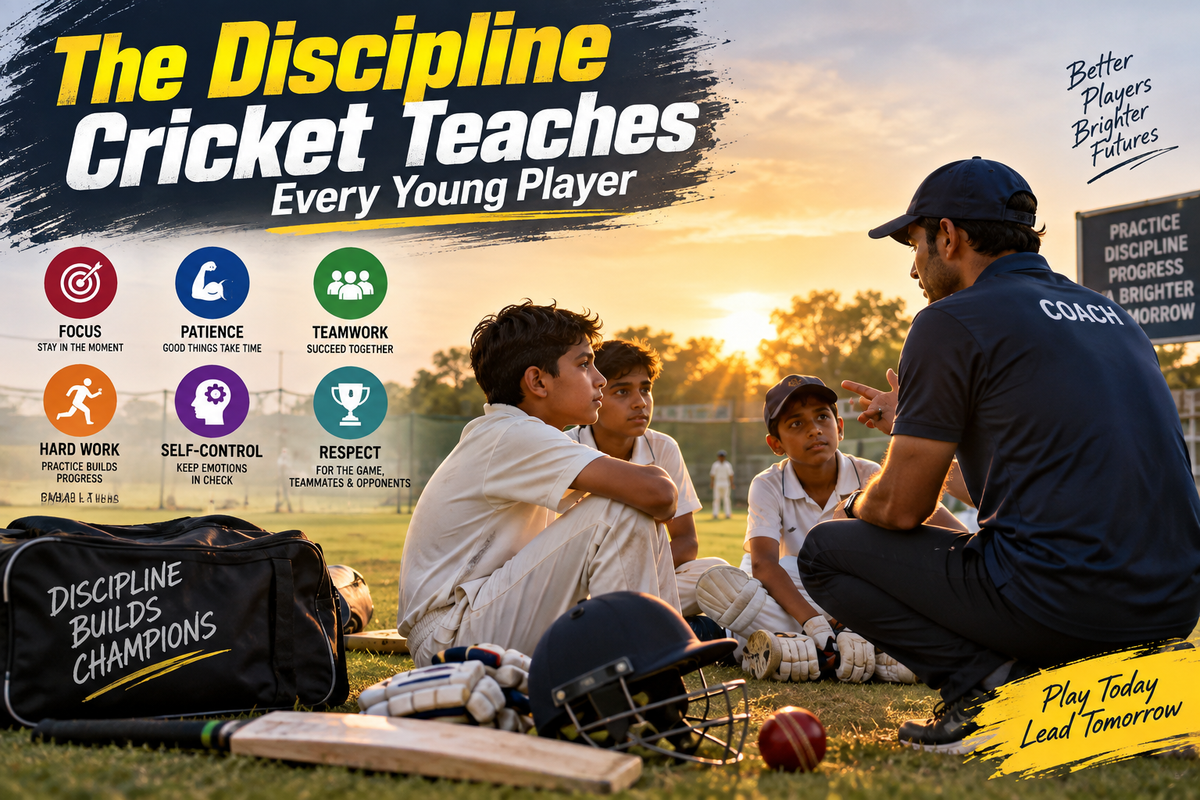
The Discipline Cricket Teaches Every Young Player
Cricket is often described as a game of bat, ball, and strategy. But for young players, its greatest lessons can extend far beyond the boundary rope. Every practice session, match, and difficult moment can help children develop habits that support them in school, relationships, and everyday life.
In the United States, youth cricket continues to grow through academies, community leagues, camps, and structured development programs. Many of these programs intentionally combine cricket skills with character development, teamwork, sportsmanship, and discipline.
Learning the Value of Practice
Cricket rewards preparation. A young batter cannot expect to master a shot after trying it once. A bowler needs repeated practice to develop accuracy and consistency.
This teaches an important lesson: improvement takes time.
Young cricketers learn to arrive at practice, listen to their coaches, repeat difficult skills, and keep working even when progress feels slow. That same attitude can help them approach schoolwork, music, other sports, and future careers.
Patience Under Pressure
Cricket can test patience like few other sports. A batter may spend several deliveries defending before finding an opportunity to score. A bowler may deliver several good balls without taking a wicket.
Young players gradually learn that not every moment produces an immediate reward.
Instead of becoming frustrated, they learn to stay focused and wait for the right opportunity. This ability to remain patient and composed can become an important life skill.
Taking Responsibility
Cricket gives players individual responsibilities within a team. A batter is responsible for their innings. A bowler must execute their role. Fielders need to stay alert because one moment can change a match.
When young players make an error, they also learn that mistakes are part of development.
The goal is not to avoid every mistake. It is to accept responsibility, learn from it, and try again.
Sports participation is associated with life skills such as responsibility, goal setting, emotional regulation, effort, respect, teamwork, and leadership.
Discipline During Training
Good cricket does not happen only on match day. Players need regular training, fitness work, skill practice, and preparation.
That routine teaches young athletes how small actions can produce bigger results over time.
A player who practices consistently may eventually see improvements in batting technique, bowling accuracy, fielding, and fitness. The connection between effort and progress can motivate children to become more disciplined in other areas of life.
Learning to Work as a Team
Cricket may give individual players opportunities to shine, but success ultimately depends on the team.
Players communicate on the field, support teammates, celebrate each other's achievements, and work together during difficult situations. Youth sports can develop communication, collaboration, problem-solving, and leadership skills.
For young players in America's increasingly diverse cricket community, the sport can also create opportunities to build friendships across different backgrounds.
Respect for Coaches, Opponents, and Officials
Cricket teaches that competition and respect should exist together.
Young players learn to respect teammates, opponents, coaches, umpires, and the rules of the game. They learn that winning is important, but how they behave while competing matters too.
USA Cricket's coaching guidance emphasizes safety, fun, inclusion, and empowerment, including creating an environment where young players can learn from mistakes without being ridiculed.
Handling Success and Failure
One of cricket's most valuable lessons is that both success and failure are temporary.
A young batter can score a century one weekend and get out for a low score the next. A bowler can take several wickets in one match and struggle in another.
Learning to celebrate success without becoming complacent—and accept disappointment without giving up—is an important part of becoming a mature athlete.
Building Confidence Through Progress
Discipline does not mean being perfect. It means continuing to work toward improvement.
When young cricketers see themselves become better through consistent practice, they develop confidence based on effort rather than simply on winning.
That confidence can influence how they approach challenges outside cricket as well.
Cricket Is About More Than the Scoreboard
For young players, the most important result may not appear on the scoreboard.
The real victories can be learning to arrive prepared, stay patient, respect others, accept responsibility, work with teammates, and continue trying after setbacks.
Youth cricket organizations across the USA increasingly emphasize character development alongside technical skills. Programs in places such as Texas and Florida, for example, combine cricket training with teamwork, discipline, sportsmanship, and personal development.
The Lasting Lesson
A young player may eventually stop playing cricket, but the discipline learned through the sport can remain.
The habit of practicing when nobody is watching.
The patience to wait for the right opportunity.
The courage to recover from failure.
The responsibility to support a team.
The respect to compete with character.
That is why cricket can be more than a game for young players—it can be preparation for life.
For America's growing youth cricket community, developing better players and developing better people can go hand in hand.