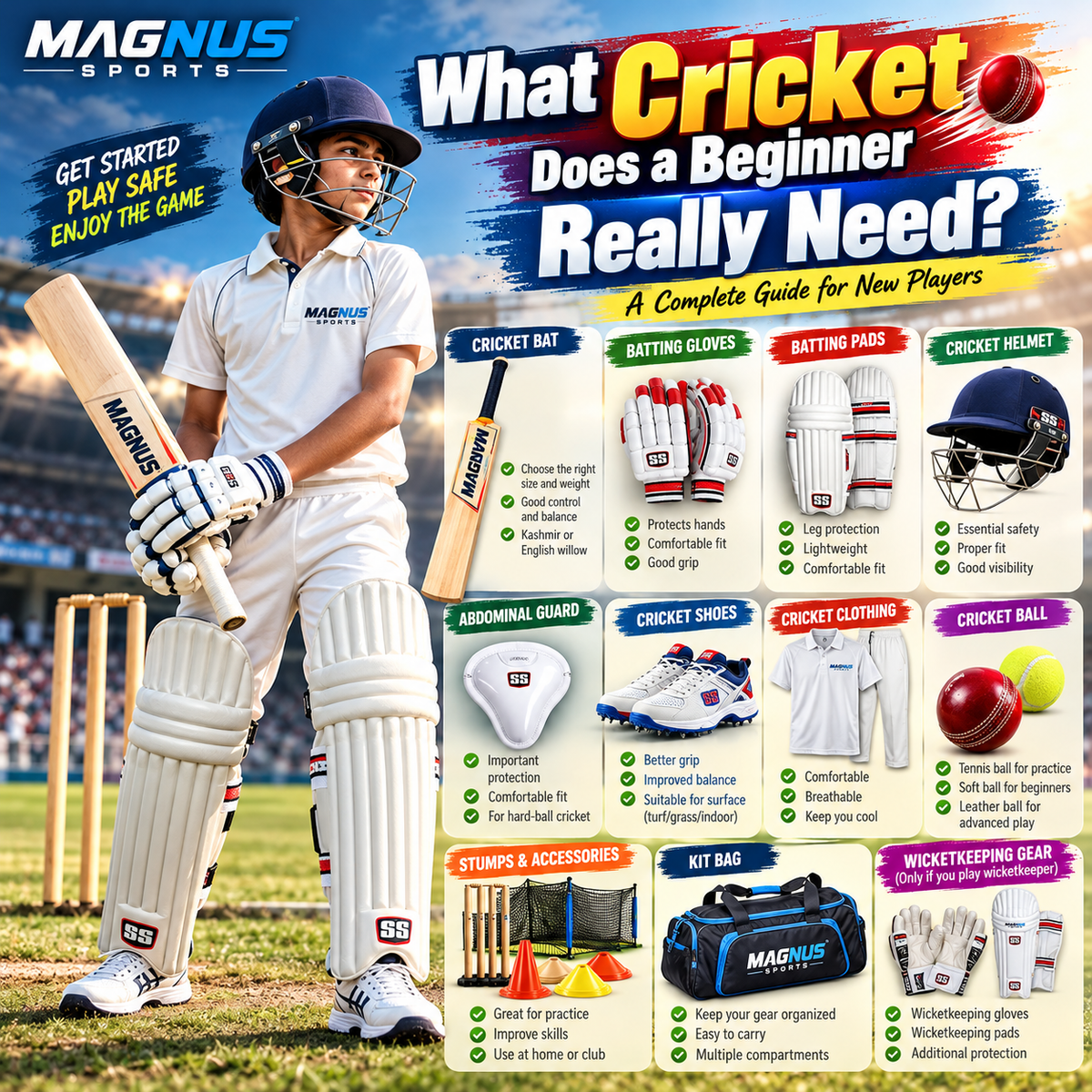
Cricket is an exciting sport that combines skill, strategy, teamwork, and athleticism. Whether you're joining a local cricket club, playing in a school league, or practicing with friends in the backyard, having the right equipment can make your experience safer and more enjoyable.
For beginners in the USA, choosing cricket gear can feel overwhelming. With so many cricket bats, batting gloves, helmets, pads, and accessories available, it's easy to spend more money than necessary.
The good news? You don't need an expensive professional cricket kit to get started. A few essential pieces of equipment will help you learn the basics, protect yourself, and build confidence on the field.
In this guide, we'll explain what cricket equipment beginners really need, what can wait until later, and how to choose the right gear for your playing style and budget.
1. Cricket Bat: Your Most Important Batting Tool
The cricket bat is one of the first pieces of equipment you'll need if you plan to become a batter. However, beginners should focus on comfort, control, and the correct size rather than choosing the most expensive bat.
There are two common types of cricket bats:
-
English willow bats: Popular among competitive players for their performance characteristics.
-
Kashmir willow bats: Often a practical and budget-friendly option for beginners and recreational players.
When choosing your first bat, consider your height, strength, age, and playing level. A bat that feels too heavy can make it difficult to control your shots and develop proper technique.
Beginner tip: Visit a cricket equipment store if possible and test a few bats before purchasing. If you're shopping online, review the manufacturer's sizing chart and weight specifications.
2. Cricket Batting Gloves: Protect Your Hands
Batting gloves are essential because they help protect your fingers and hands from impact while improving grip and comfort.
Look for gloves with:
-
Protective finger padding
-
A secure wrist closure
-
Comfortable, breathable materials
-
A flexible design that allows a natural grip
Beginners don't necessarily need premium professional gloves. A well-fitting pair with suitable protection is a sensible starting point.
Avoid gloves that are too loose or restrict your ability to hold the bat comfortably.
3. Cricket Batting Pads: Essential Leg Protection
Batting pads protect your shins and knees from fast-moving cricket balls. They are particularly important when facing hard cricket balls during practice or matches.
When choosing batting pads, look for:
-
Lightweight construction
-
Adequate padding and impact protection
-
Comfortable straps
-
A secure fit around the knees and lower legs
-
Freedom of movement when running between the wickets
For beginners, comfort matters just as much as protection. Heavy or poorly fitted pads can make batting tiring and affect your footwork.
Options such as the SS Aerolite and Magnus Signature batting legguards illustrate the different styles available to players looking for lightweight designs or additional protective features. Always check the specifications and fit of the particular model before buying.
4. Cricket Helmet: A Must-Have for Safety
A cricket helmet is one of the most important safety purchases for anyone facing hard-ball bowling.
A suitable helmet should provide a secure fit, appropriate impact protection, and a properly fitted faceguard. Check that the model meets the applicable cricket safety requirements and that the faceguard is compatible with the helmet.
Before purchasing, consider:
-
Correct head size
-
Secure chin strap
-
Comfortable padding
-
Good visibility
-
A properly fitted grille or faceguard
Never use a casual bicycle helmet as a substitute for a cricket helmet. Choose protective equipment designed specifically for cricket.
Beginners should wear a suitable helmet during hard-ball batting practice and matches, following their coach's safety guidance.
5. Cricket Abdominal Guard: Protection You Shouldn't Skip
An abdominal guard, often called a box or protective cup, is another important item for hard-ball cricket.
It protects sensitive areas from accidental impact and is typically worn inside a compatible support garment.
Choose the correct size and make sure the guard stays securely in position. Players should also check their team's recommendations for any additional protective equipment appropriate to their role.
Safety equipment is not an area where beginners should cut corners.
6. Cricket Shoes: Find the Right Grip
The right footwear helps you maintain balance, move efficiently, and reduce the risk of slipping.
The best shoes depend on the surface where you play.
-
Turf wickets: Cricket shoes with suitable spikes may offer the necessary traction.
-
Artificial turf: Rubber-soled cricket shoes or appropriate non-marking athletic footwear may be more suitable.
-
Indoor cricket: Indoor court shoes or footwear recommended by the facility can provide better grip.
Beginners who practice occasionally may be able to start with suitable athletic shoes, depending on the playing surface and league rules.
As you play more frequently, investing in cricket-specific footwear can improve comfort and stability.
7. Cricket Clothing: Keep It Comfortable
You don't need a professional team uniform to start playing cricket.
For casual practice, comfortable athletic clothing is usually sufficient. Traditional cricket whites are common in longer-format matches, while colored uniforms are widely used in limited-overs competitions.
Your basic clothing checklist includes:
-
A breathable athletic shirt
-
Comfortable cricket trousers or athletic pants
-
Moisture-wicking socks
-
Suitable underlayers for protective equipment
Check your league's dress code before buying a uniform. This prevents unnecessary spending on clothing you may not need.
8. Cricket Ball: Start with the Right Type
The type of ball you practice with makes a significant difference to safety and skill development.
Beginners can consider three main options:
Tennis ball: A popular choice for casual games and introductory practice. It is generally more forgiving than a hard cricket ball, but players should still use appropriate precautions.
Soft training ball: Useful for beginners learning basic batting, catching, and bowling techniques under supervision.
Leather cricket ball: Used in traditional hard-ball cricket and many organized competitions. It requires appropriate protective equipment and supervised practice, especially for new players.
If you're just learning to bat or bowl, a tennis ball or suitable soft training ball can help you develop basic skills before progressing to hard-ball cricket.
9. Cricket Stumps and Practice Equipment
You don't need a full professional training setup to practice effectively.
A basic set of plastic or portable stumps can help beginners work on batting, bowling accuracy, and fielding drills.
Other useful practice accessories include:
-
Cricket cones for running and fielding drills
-
A ball bag for storage
-
A batting tee for basic batting practice
-
A rebound net or suitable practice net, where available
-
A cricket kit bag to organize equipment
These items are helpful but optional. If you practice at a club with shared equipment, you may not need to purchase them immediately.
10. Wicketkeeping Gear: Only If You're a Wicketkeeper
If you're planning to play as a wicketkeeper, you'll need additional equipment.
Typical wicketkeeping gear includes:
-
Wicketkeeping gloves
-
Wicketkeeping leg pads
-
An abdominal guard
-
A suitable helmet when required for the type of practice or match
Wicketkeeping gloves and pads are designed differently from batting gloves and batting pads. Choose equipment specifically intended for wicketkeeping.
If you're still deciding which position to play, wait until you've tried the role before investing in a complete wicketkeeping kit.
11. Cricket Kit Bag: Keep Everything Organized
A cricket kit bag is useful for transporting your bat, pads, gloves, helmet, shoes, and other accessories.
For beginners, a medium-sized bag with separate compartments may be sufficient. Players who own multiple bats or extensive protective equipment may prefer a larger wheelie bag.
Look for durable material, sturdy zippers, comfortable carrying straps, and enough space for your essential gear.
A kit bag won't improve your batting technique, but it will make traveling to practices and matches much easier.
12. How Much Should a Beginner Spend on Cricket Equipment in the USA?
Your budget depends on whether you're playing casual tennis-ball cricket, joining a hard-ball club, or preparing for organized competition.
The following are illustrative planning ranges in US dollars, not verified current retail prices.
| Equipment | Estimated beginner budget |
|---|---|
| Cricket bat | $40–$120 |
| Batting gloves | $15–$45 |
| Batting pads | $25–$70 |
| Cricket helmet | $40–$100 |
| Abdominal guard and support | $10–$30 |
| Cricket shoes | $40–$100 |
| Cricket clothing | $20–$50 |
| Cricket kit bag | $25–$70 |
You don't have to buy everything at once. A beginner playing casual tennis-ball cricket may need only a bat, ball, comfortable clothing, and appropriate footwear. A player joining a hard-ball team will generally need a more complete protective kit.
As a rough planning guide, a basic personal hard-ball kit may cost around $200–$500, depending on the brands, sizes, quality, and items already available to you. This estimate excludes club fees, coaching, and optional training accessories.
To reduce costs, ask your club whether it lends equipment, compare complete starter kits with individual purchases, and check sizing carefully before ordering online.
13. What Cricket Equipment Can Beginners Skip at First?
One of the easiest ways to save money is to avoid buying equipment you won't use regularly.
You can usually postpone purchasing:
-
Multiple premium cricket bats
-
Specialized batting accessories
-
Advanced training aids
-
Extra pairs of gloves and pads
-
Expensive professional uniforms
-
Specialized wicketkeeping gear if you aren't playing that role
Focus on the equipment that matches your current level and playing format. You can upgrade as your skills improve and you understand your preferences.
However, don't skip essential protective equipment when playing hard-ball cricket.
14. Where Can Beginners Buy Cricket Equipment in the USA?
Cricket equipment is available through specialist cricket retailers, online sports stores, and some local cricket clubs.
When shopping online, compare product descriptions, size charts, return policies, and shipping costs. Make sure you understand whether a bat is made from English willow or Kashmir willow and whether protective equipment is intended for your level of play.
Players looking for cricket bats, batting gloves, legguards, helmets, and accessories can explore specialist retailers such as Magnus Sports and compare available products to find suitable equipment.
If you're new to the sport, asking an experienced teammate or coach for advice before making a large purchase can help you avoid buying the wrong size or type of gear.
Beginner Cricket Equipment Checklist
Use this checklist before your first practice session.
-
Cricket bat appropriate for your size and strength
-
Batting gloves
-
Batting pads
-
Properly fitted cricket helmet for hard-ball play
-
Abdominal guard and appropriate support
-
Suitable cricket shoes
-
Comfortable cricket clothing
-
Appropriate practice ball
-
Water bottle and basic personal essentials
Add a kit bag and optional training accessories when your budget allows. If you're a wicketkeeper, include the equipment required for that position.
Final Thoughts
Getting started with cricket doesn't have to be expensive or complicated. The best beginner kit is one that fits properly, provides appropriate protection, and supports the way you intend to play.
Start with the essentials, prioritize safety, and avoid spending money on advanced equipment before you need it. As your confidence grows, you can upgrade your bat, experiment with different gloves and pads, and invest in additional training accessories.
Whether you're playing recreational cricket in California, joining a club in New Jersey, or practicing with friends in Texas, the right equipment will help you enjoy the game and develop your skills.
Ready to build your first cricket kit? Explore the cricket equipment available at Magnus Sports and choose gear that matches your playing level, budget, and goals.
Play smart. Stay protected. Enjoy every innings!
Frequently Asked Questions
1. What is the most important cricket equipment for beginners?
A properly sized bat and suitable footwear are useful starting points for learning, while a cricket helmet, batting gloves, batting pads, and an abdominal guard are essential considerations for safe hard-ball batting.
2. Can I start playing cricket without buying a full kit?
Yes. Many clubs and recreational groups provide shared equipment. Ask what is available before purchasing your own gear.
3. Is a tennis ball suitable for beginner cricket?
Yes. Tennis-ball cricket is a popular way to learn basic batting, bowling, and fielding skills. Use an appropriate playing area and follow suitable safety precautions.
4. Should beginners buy an expensive cricket bat?
No. A comfortable, correctly sized bat that suits your strength and skill level is usually a better first purchase than an expensive professional model.
5. How much does a beginner cricket kit cost in the USA?
A basic hard-ball kit may cost approximately $200–$500, depending on the equipment selected and current retail prices. Beginners can often spend less if they borrow equipment or start with a simpler recreational setup.