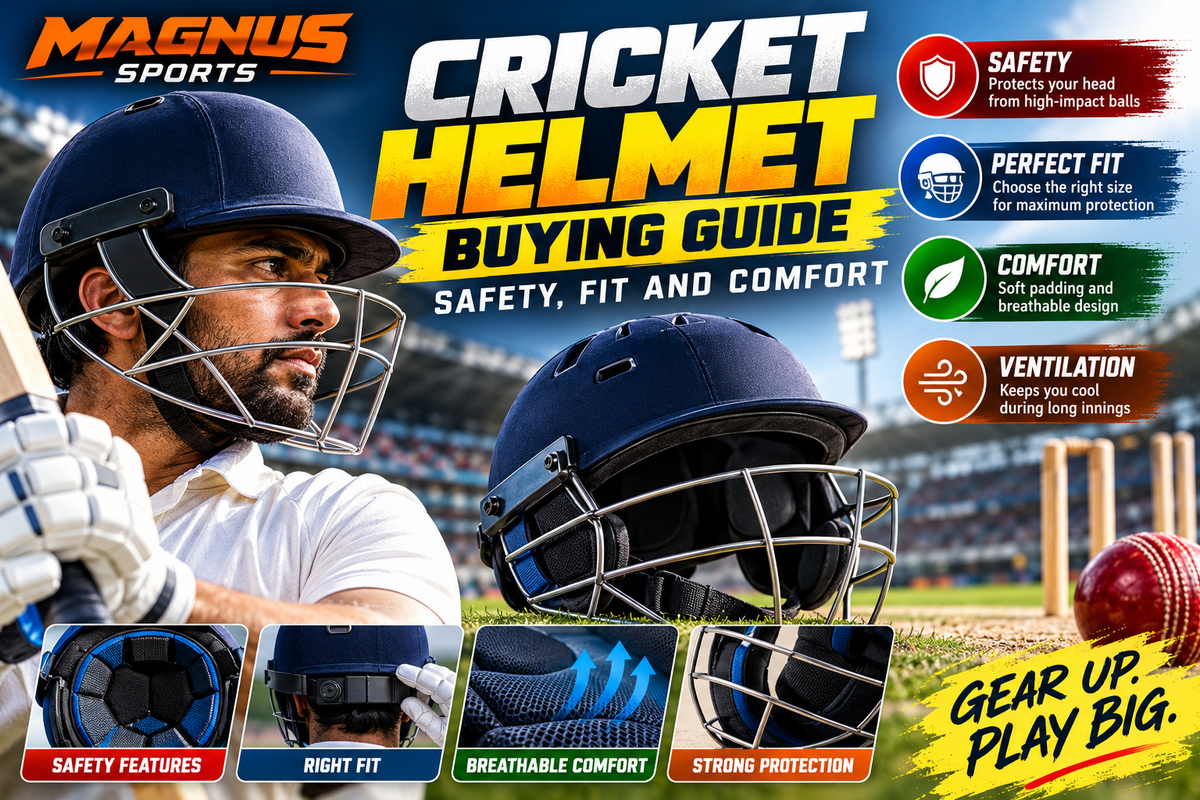
Cricket is an exciting sport that demands skill, concentration, and confidence. Whether you're playing in a local league, practicing in the nets, or competing in a competitive cricket tournament in the United States, wearing the right protective equipment is essential. Among all cricket gear, a helmet is one of the most important investments a batter can make.
A cricket helmet protects your head and face from potential impacts caused by fast deliveries, unexpected bounces, and deflections off the bat. However, not every helmet offers the same fit, comfort, or level of protection.
So, how do you choose the right cricket helmet?
This Cricket Helmet Buying Guide explains the key factors to consider, including safety, sizing, face protection, ventilation, materials, and price, so you can make an informed decision before buying your next helmet.
1. Prioritize Safety Before Style
Safety should always come first when choosing a cricket helmet. Modern cricket helmets are designed to absorb and distribute impact forces, helping reduce the risk of serious head injuries. However, no helmet can eliminate every risk associated with being struck by a cricket ball.
Before purchasing a helmet, check the following:
-
Relevant safety standards: Look for a helmet that complies with the applicable cricket helmet standard and competition requirements. Depending on the product and market, this may include BS 7928:2013 and applicable amendments.
-
Strong outer shell: A durable shell helps resist impacts and protect the head.
-
Impact-absorbing liner: Internal padding helps manage impact energy and improves comfort.
-
Secure faceguard: The grille should be firmly attached and designed to provide appropriate facial protection.
-
Reliable fastening system: The chin strap should keep the helmet securely in position during play.
If you play in an organized league in the USA, check your competition's equipment rules before buying. A helmet that is suitable for recreational practice may not automatically meet every league's requirements.
Pro tip: Never choose a helmet based on appearance alone. Verify the manufacturer's safety information, the model's specifications, and its suitability for your level of play.
2. Get the Right Helmet Fit
A cricket helmet can only provide its intended protection when it fits correctly. A loose helmet may shift during movement or impact, while a helmet that is too tight can cause discomfort and distraction.
Follow these steps to find the right fit.
Step 1: Measure Your Head
Use a flexible measuring tape to measure the circumference of your head just above your eyebrows and ears, around the widest part of the back of your head.
Compare your measurement with the manufacturer's size chart. Sizes vary between brands, so do not assume that a medium helmet from one manufacturer will fit the same as a medium from another.
Step 2: Check the Position
Place the helmet on your head so it sits level and covers the forehead appropriately. It should not tilt backward, slide forward, or obstruct your vision.
Step 3: Test the Movement
Gently move your head from side to side and up and down. The helmet should remain stable without excessive pressure on your forehead or temples.
Step 4: Adjust the Chin Strap
Fasten the chin strap according to the manufacturer's instructions. It should help keep the helmet in place without causing discomfort or restricting normal movement.
Step 5: Check the Faceguard
Make sure the grille is correctly positioned and securely attached. Follow the manufacturer's guidance on the required clearance between the faceguard and your face, and never modify the grille to make it fit.
Remember: If you are between sizes, try the available options rather than automatically choosing the larger or smaller one.
3. Choose the Right Type of Cricket Helmet
Different players have different needs. Your playing level, age, position, and personal fit preferences should influence your choice.
Senior Cricket Helmets
Senior helmets are designed for adult players and are available in a range of sizes and configurations. They are suitable for club cricket, competitive matches, and practice sessions when properly fitted and approved for the intended use.
Junior Cricket Helmets
Junior helmets are designed for younger players with smaller heads. They should offer an appropriate fit without being excessively heavy or restricting vision.
Avoid buying an oversized adult helmet for a child simply because they may grow into it. Proper fit and suitable protection are more important than long-term convenience.
Lightweight Cricket Helmets
Lightweight models can be appealing to players who spend long periods batting in hot weather. However, lightweight construction should never come at the expense of the helmet's required safety performance.
Compare the helmet's certified specifications, fit, balance, and ventilation rather than relying on weight alone.
Premium Cricket Helmets
Premium helmets may offer upgraded materials, refined padding, improved adjustment systems, and different grille configurations. These features can improve the wearing experience, but a higher price does not automatically mean better protection for every player.
4. Understand the Faceguard and Grille
The faceguard is an important part of a cricket helmet because it helps protect the face from direct impacts while allowing the batter to see the ball.
When evaluating a grille, consider these factors:
-
Secure attachment: The grille and its mounting points should be in good condition and correctly fitted.
-
Visibility: You should be able to track the ball without the grille obstructing your normal field of view.
-
Appropriate clearance: Follow the manufacturer's specified clearance requirements between the grille and your face.
-
Compatibility: Use only a grille designed and approved for your helmet model.
-
Material and construction: Check the manufacturer's specifications for strength, durability, and intended use.
Do not bend, cut, or otherwise alter a grille to create extra space. If the faceguard does not fit correctly, consult the manufacturer or an authorized retailer about a compatible replacement.
5. Look for Ventilation and Comfort
Cricket matches in the USA can take place in warm and humid conditions, particularly during summer tournaments. A poorly ventilated helmet can feel uncomfortable during long innings and practice sessions.
Consider the following comfort features:
Ventilation openings: Well-designed airflow channels can help reduce heat buildup.
Moisture-managing padding: Internal padding designed to manage sweat can improve the wearing experience.
Adjustable fit systems: Some helmets feature adjustable liners or fitting mechanisms that help provide a more secure fit.
Balanced weight distribution: A helmet that feels balanced can be more comfortable during extended use.
Removable or replaceable padding: Where supported by the manufacturer, replaceable components can help maintain hygiene and fit.
Always try a helmet on before purchasing if possible. Wear it for several minutes, check for pressure points, and make sure the chin strap and grille do not interfere with comfortable movement.
6. Consider Your Playing Level and Cricket Ball Type
Not every cricket environment presents the same demands. The helmet you choose should be appropriate for the ball type, playing conditions, and competition rules.
-
Hard-ball cricket: Prioritize a helmet specifically designed for hard-ball cricket and compliant with the relevant safety requirements.
-
Youth cricket: Select a properly fitted junior model suitable for the player's age, head size, and level of competition.
-
Indoor cricket: Check the facility's rules and choose equipment appropriate for the type of cricket being played.
-
Practice and net sessions: Use suitable head protection whenever facing deliveries that could cause injury, even during informal training.
A helmet designed for a different sport or a soft-ball activity should not automatically be assumed suitable for hard-ball cricket.
7. How Much Should You Spend on a Cricket Helmet?
Cricket helmets are available at different price points, from entry-level models to premium options. Prices vary by brand, materials, features, retailer, and availability.
Rather than choosing solely by price, compare helmets using a practical checklist.
| Feature | What to look for |
|---|---|
| Safety | Applicable standards and competition approval |
| Fit | Secure, stable fit with no painful pressure points |
| Faceguard | Compatible, secure, and correctly positioned |
| Comfort | Suitable padding and ventilation |
| Durability | Quality construction and replaceable parts where available |
| Value | Features and fit that justify the price |
For beginners, an appropriately certified and correctly fitted entry-level helmet may be a sensible choice. Experienced players may prefer a premium model if its fit, weight distribution, materials, and adjustment features better meet their needs.
The best helmet is not necessarily the most expensive one. It is the helmet that meets the relevant safety requirements and fits you properly.
8. Common Cricket Helmet Buying Mistakes to Avoid
Avoid these mistakes when shopping for your next cricket helmet:
-
Buying the wrong size: An unstable fit can compromise how the helmet stays in position.
-
Ignoring safety specifications: Always check the product's safety information and your league's requirements.
-
Choosing style over function: Colors and designs matter less than protection, fit, and visibility.
-
Using an incompatible grille: A faceguard that is not designed for the helmet may not provide the intended protection.
-
Buying a helmet for a child to grow into: Children need appropriately sized equipment now.
-
Ignoring damage: Cracks, deformation, damaged straps, or compromised padding can affect performance.
-
Assuming a used helmet is safe: A helmet may have hidden impact damage or an unknown history.
-
Continuing to use a helmet after a significant impact: Follow the manufacturer's replacement instructions and seek professional guidance if the helmet has sustained an impact.
9. How to Maintain Your Cricket Helmet
Proper care can help maintain your helmet's condition, although it cannot restore a helmet that has been damaged.
-
Clean the shell and padding according to the manufacturer's instructions.
-
Allow the helmet to dry naturally after use.
-
Store it in a cool, dry place away from direct sunlight and excessive heat.
-
Inspect the shell, padding, grille, attachment points, and chin strap regularly.
-
Replace worn or damaged components only with compatible manufacturer-approved parts.
-
Follow the manufacturer's service-life and replacement guidance.
-
Replace the helmet after an impact whenever required by its instructions, even if there is no obvious external damage.
Never use harsh chemicals or make structural modifications unless explicitly permitted by the manufacturer.
10. Where to Buy Cricket Helmets in the USA
Cricket players in the United States can explore specialist cricket retailers and online cricket stores to compare helmet sizes, brands, grille options, and prices.
Before placing an order, check the retailer's sizing information, product specifications, return policy, shipping options, and availability of compatible replacement parts.
If you are shopping online, measure your head carefully and compare the measurement against the exact model's size chart. When possible, try the helmet on at a local cricket store before making your final decision.
At Magnus Sports, cricket players can explore cricket equipment and accessories to build a match-ready kit. When choosing a helmet, prioritize the correct fit, suitable safety specifications, and compatibility with your playing requirements.
Frequently Asked Questions (FAQs)
1. How do I know if my cricket helmet fits correctly?
A properly fitted helmet should sit level, remain stable when you move your head, and feel secure without painful pressure. The chin strap should be correctly fastened, and the faceguard should be positioned according to the manufacturer's instructions.
2. Which safety standard should I look for in a cricket helmet?
Look for the applicable cricket helmet standard, such as BS 7928:2013 and relevant amendments, and confirm that the helmet meets your competition's current rules. Verify the exact model's documentation rather than relying only on a product listing's general claims.
3. Are lightweight cricket helmets safe?
A lightweight helmet can be suitable if it meets the relevant safety requirements and is designed for the intended type of cricket. Weight alone does not establish how protective a helmet is.
4. Should children use adult cricket helmets?
Children should generally use helmets sized and designed for their age and head dimensions. An oversized helmet may not remain in the correct position and should not be used as a substitute for a proper fit.
5. When should I replace my cricket helmet?
Replace a helmet if it is damaged, has sustained an impact that requires replacement under the manufacturer's instructions, or has reached its recommended service life. If you are unsure about its condition, contact the manufacturer for guidance.
6. Can I use the same helmet for practice and matches?
Yes, provided the helmet is appropriate for the type of cricket, fits correctly, remains in good condition, and satisfies the relevant match rules. Inspect it before each use.
Conclusion
Choosing the right cricket helmet is about more than appearance or price. Safety, proper fit, faceguard compatibility, ventilation, and comfort should guide your decision.
Whether you are a beginner joining a local cricket club in the USA, a junior player developing your technique, or an experienced batter preparing for a competitive season, take the time to compare your options and try on the helmet before buying.