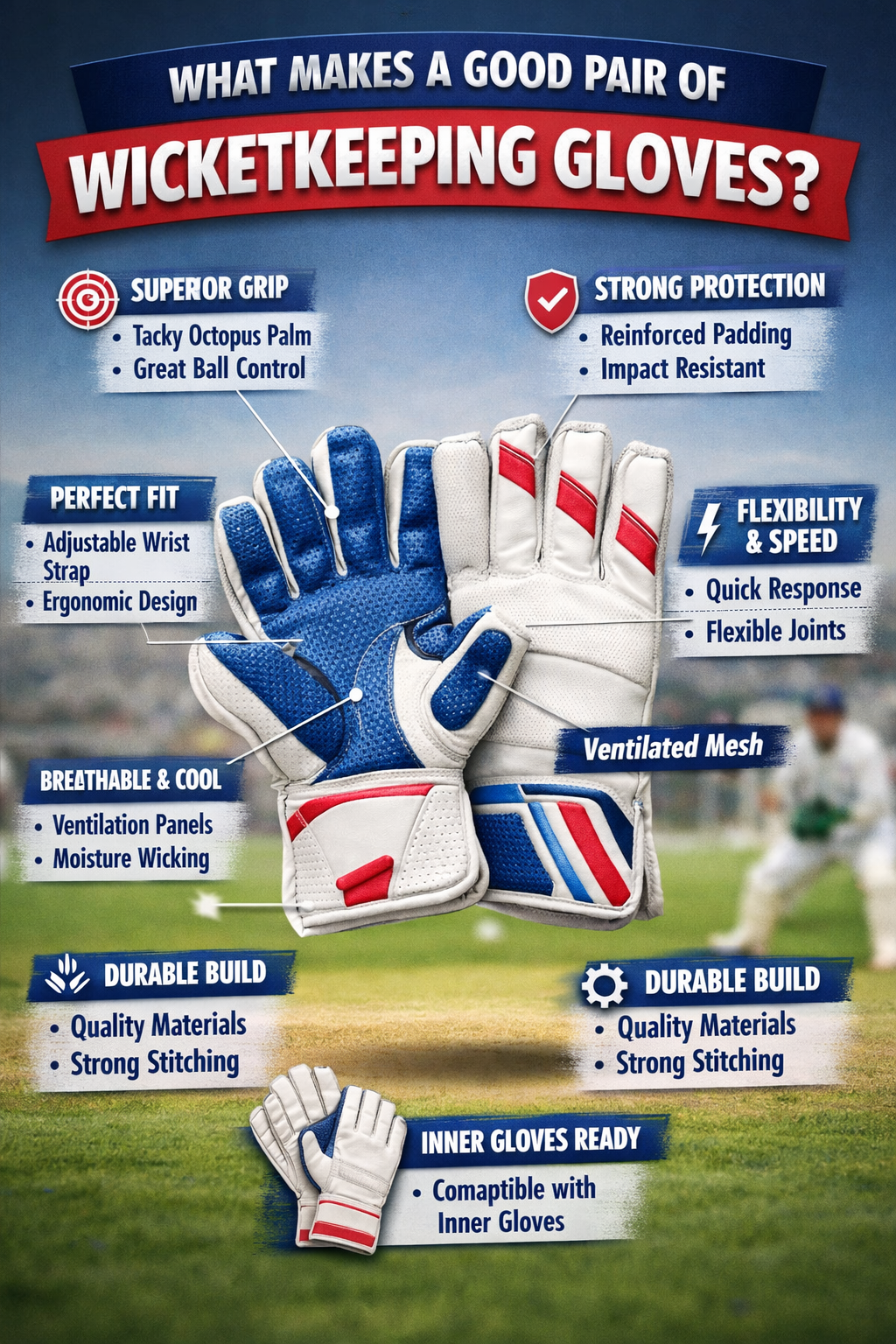
What Makes a Good Pair of Wicketkeeping Gloves? (USA Guide)
Wicketkeeping is one of the most demanding roles in cricket. Whether you're playing in a local league in the U.S. or competing at a higher level, your gloves are your most important piece of equipment. The right pair can improve your catching, boost confidence, and protect your hands from serious impact. But what exactly makes a good pair of wicketkeeping gloves?
Let’s break it down.
1. Superior Grip and Control
A wicketkeeper’s primary job is to catch — and grip is everything.
Good gloves feature:
- High-quality rubber or octopus-style palm surfaces
- Strong tackiness for better ball control
- Consistent grip in both dry and slightly damp conditions
In the U.S., where pitches and weather can vary widely, reliable grip can be the difference between a clean catch and a costly drop.
2. Strong Protection Without Bulk
Fast bowlers and hard balls demand serious hand protection.
Look for:
- Reinforced finger chambers
- Impact-absorbing padding (especially in the fingertips and palms)
- Stiff yet flexible backhand design
The best gloves strike a balance — they protect your hands without feeling heavy or restricting movement.
3. Comfort and Fit
A perfect fit is non-negotiable. Gloves that are too loose or too tight can affect performance and cause discomfort over long matches.
Key features include:
- Ergonomic design that matches natural hand shape
- Adjustable wrist straps for a secure fit
- Breathable inner lining to reduce sweat buildup
For American players who may play longer weekend games or back-to-back matches, comfort becomes even more important.
4. Flexibility and Quick Response
Wicketkeepers need lightning-fast reactions, especially standing up to the stumps.
Good gloves offer:
- Flexible finger joints
- Lightweight construction
- Minimal break-in time
This allows you to move freely and react instantly to edges, deflections, and stumpings.
5. Ventilation and Sweat Control
Hot summer games across states like Texas or California can make gloves sweaty and slippery.
Top gloves include:
- Mesh panels or ventilation zones
- Moisture-wicking inner materials
- Quick-drying components
Better airflow keeps your hands dry and improves grip consistency throughout the game.
6. Durability and Build Quality
Cricket gear is an investment, especially in the growing U.S. cricket scene.
Look for:
- High-quality stitching
- Durable leather or synthetic materials
- Strong palm bonding that resists wear and tear
A good pair of gloves should last multiple seasons with proper care.
🏏 7. Inner Gloves Compatibility
Most wicketkeepers wear inner gloves for added comfort and sweat absorption.
Make sure:
- The outer gloves have enough room for inners
- The fit doesn’t become too tight when layered
- Grip remains effective with both layers on
🇺🇸 Why It Matters for U.S. Cricketers
Cricket in the United States is growing rapidly, with more leagues, tournaments, and turf wickets emerging every year. As competition improves, so does the need for quality gear.
A reliable pair of wicketkeeping gloves helps you:
- Perform consistently across different pitch conditions
- Reduce injury risk
- Build confidence behind the stumps
Final Thoughts
A good pair of wicketkeeping gloves isn’t just about looks or brand — it’s about performance, protection, and comfort. When choosing your gloves, focus on grip, fit, flexibility, and durability.
Invest wisely, and you’ll notice the difference every time you step behind the stumps.