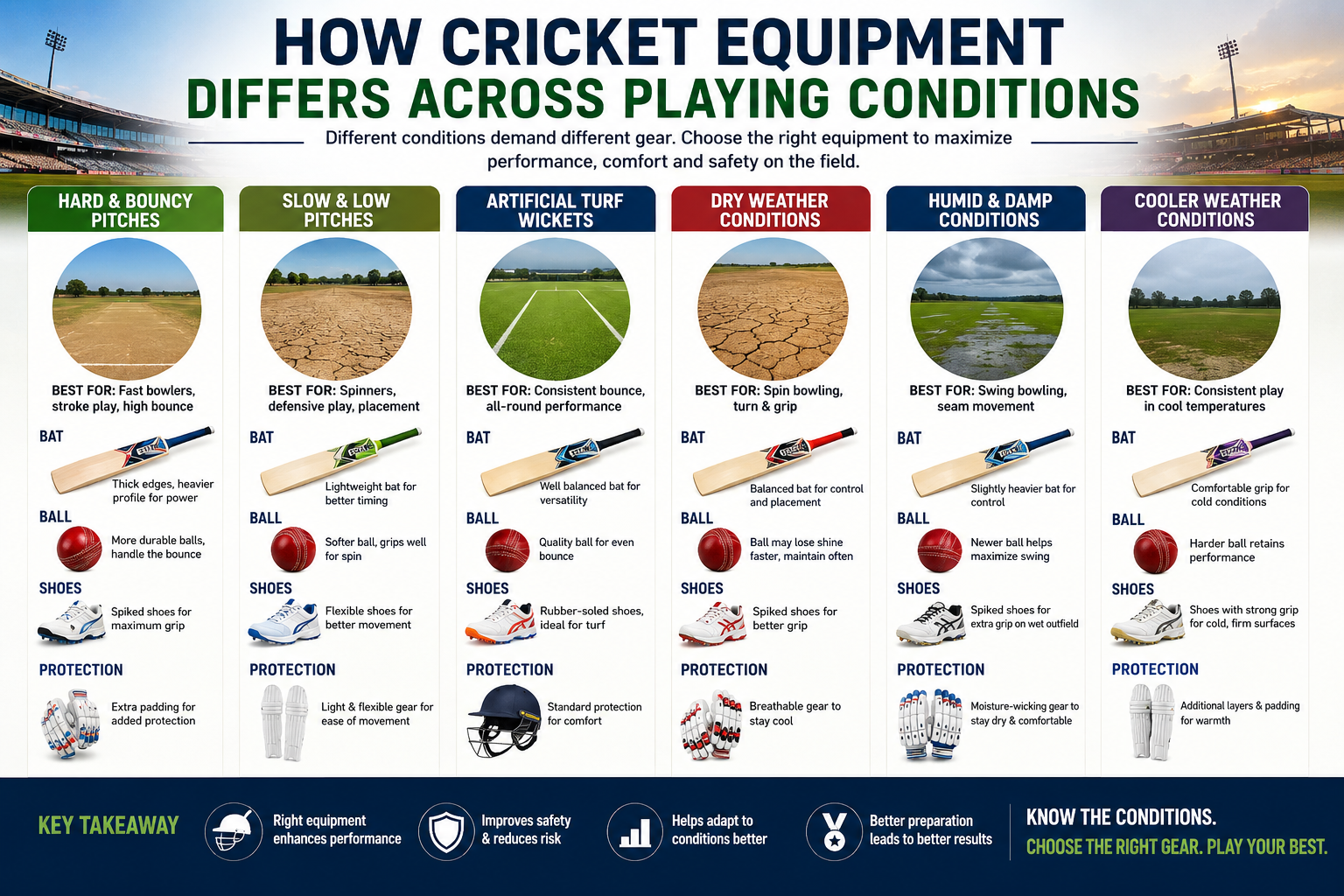
How Cricket Equipment Differs Across Playing Conditions
Cricket is a game of skill, strategy, and adaptation. While talent and technique are essential, the equipment players use can significantly impact performance depending on the playing conditions. From dry pitches in California to damp early-morning grounds in New York, selecting the right cricket gear can help players maximize their potential and stay competitive throughout the match.
As cricket continues to grow across the United States, understanding how equipment differs across various playing environments is becoming increasingly important for players at every level.
Why Playing Conditions Matter
No two cricket grounds are exactly alike. Weather, pitch preparation, outfield quality, and match format all influence how the ball behaves and how players should approach the game. Equipment that performs exceptionally well in one setting may not be the best choice in another.
Choosing gear based on playing conditions can improve:
- Batting performance
- Bowling effectiveness
- Player comfort
- Safety and protection
- Overall match consistency
Bat Selection for Different Conditions
Hard and Bouncy Pitches
On hard surfaces commonly found in parts of the USA during summer months, players often benefit from bats with:
- Thick edges
- Large sweet spots
- Slightly heavier profiles
These bats help generate power and handle faster bowling speeds effectively.
Slow and Low Pitches
On slower wickets, timing becomes more important than raw power. Players may prefer:
- Lightweight bats
- Balanced pickup
- Enhanced maneuverability
These characteristics help batsmen react quickly and rotate the strike more efficiently.
Artificial Turf Wickets
Many cricket matches in the United States are played on artificial surfaces. These wickets often produce consistent bounce, making versatile bats with balanced weight distribution a popular choice.
Cricket Balls and Playing Conditions
Dry Weather Conditions
Dry conditions often assist spin bowlers as the surface begins to wear. In these situations:
- Spinners rely on grip and revolutions
- Balls may lose shine faster
- Maintaining ball condition becomes critical
Humid and Damp Conditions
In regions with higher humidity, swing bowlers gain an advantage. The ball can move more through the air, rewarding bowlers who maintain seam position and shine.
Fast bowlers frequently prefer newer balls in these conditions to maximize movement.
Footwear Choices Matter
Grass Outfields
Natural grass surfaces require cricket shoes with spikes to provide:
- Better traction
- Improved balance
- Safer movement during batting and fielding
Artificial Turf
Many American cricket facilities feature turf wickets and synthetic outfields. Players often choose rubber-soled cricket shoes that offer excellent grip without damaging the playing surface.
Wet Conditions
When grounds become damp after rain, extra grip becomes essential to prevent slipping and maintain performance.
Protective Gear Adjustments
Hot Summer Conditions
Many cricket matches across the USA take place during warm weather. Players often prefer:
- Lightweight helmets
- Breathable batting pads
- Moisture-wicking gloves
These features help reduce fatigue and improve comfort throughout long innings.
Cooler Conditions
In colder climates or early-season matches, players may prioritize:
- Additional padding
- Thermal base layers
- Enhanced hand protection
Maintaining comfort allows players to stay focused and perform consistently.
Bowling Equipment Considerations
Different conditions can influence bowling strategies and gear preferences.
Fast Bowlers
On lively pitches, fast bowlers may benefit from:
- Supportive footwear
- Durable cricket balls
- Equipment designed for high-impact performance
Spin Bowlers
On dry surfaces, spinners often focus on:
- Finger-friendly grip aids
- Well-maintained balls
- Consistent release control
The right equipment can help maximize turn and accuracy.
Fielding Gear for Various Environments
Fielders also adjust their equipment based on conditions.
Sunny Conditions
Players often use:
- Sunglasses
- Caps or wide-brim hats
- Sweat-resistant accessories
Fast Outfields
On quick grounds, fielders need footwear that allows explosive movement while maintaining control during dives and sharp turns.
Adapting to Cricket's Growth in the USA
The diversity of cricket venues across the United States means players frequently encounter varying conditions. Whether competing in Texas, California, Florida, New York, or New Jersey, having the right equipment for the environment can provide a significant advantage.
Investing in quality bats, footwear, protective gear, and accessories suited to local conditions helps players perform more consistently and enjoy the game at a higher level.
Final Thoughts
Cricket equipment is not a one-size-fits-all solution. Playing conditions influence everything from bat selection and footwear to protective gear and bowling strategies. Understanding these differences allows players to make smarter equipment choices and adapt more effectively to changing match situations.
As cricket continues to expand across the USA, players who learn to match their gear to the conditions will gain an edge on the field. The right equipment, combined with skill and preparation, can make all the difference when it matters most.