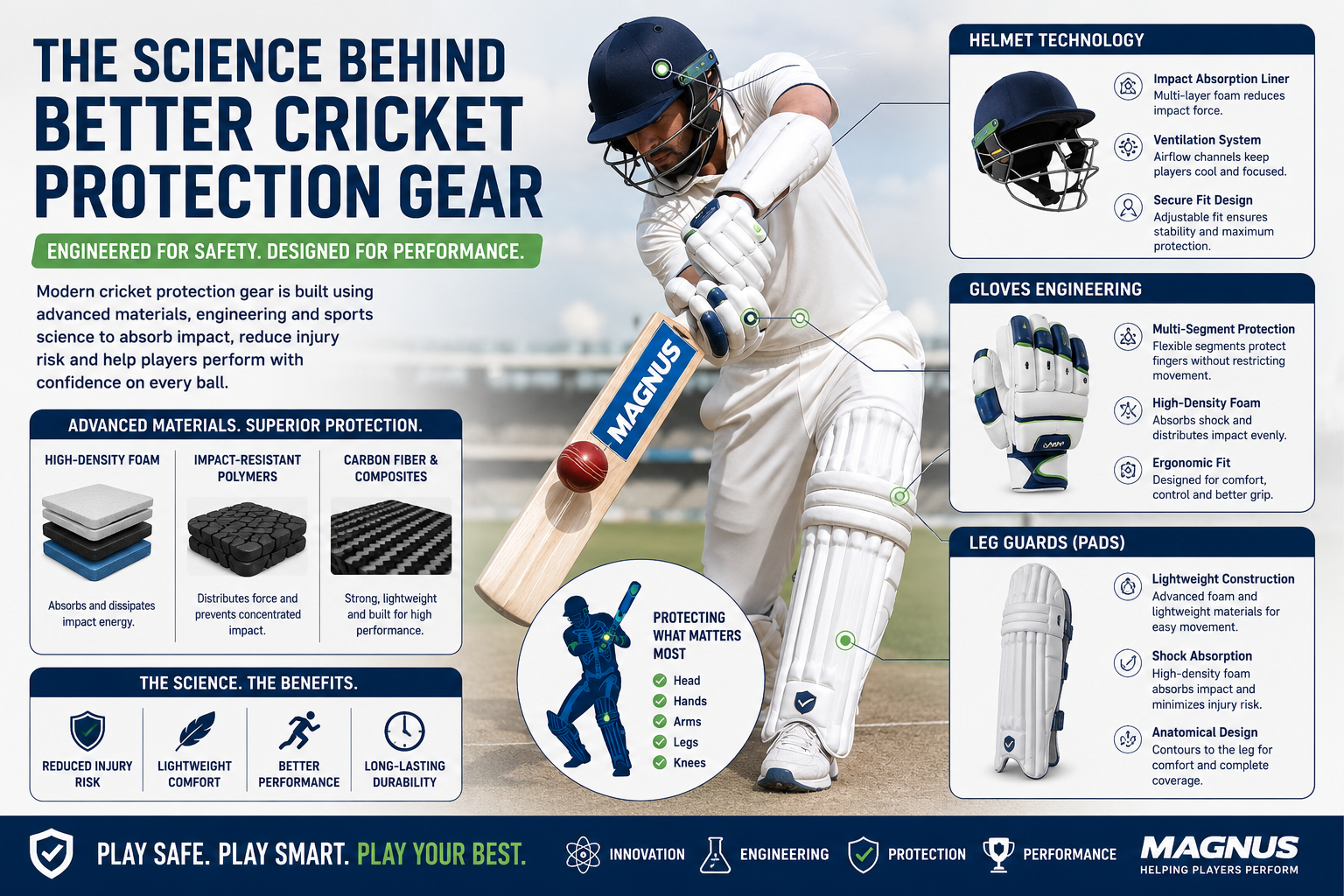
The Science Behind Better Cricket Protection Gear
Cricket is one of the fastest-growing sports in the United States, with more players joining leagues, clubs, and youth programs every year. While batting technique and skill development are essential, player safety remains equally important. Modern cricket protection gear is no longer just about adding extra padding—it is built using advanced materials, engineering, and sports science to reduce injury risks while maximizing comfort and performance.
Let's explore the science behind today's cricket protection gear and why investing in quality equipment can make a significant difference on the field.
Why Protection Matters in Cricket
A cricket ball can travel at speeds exceeding 90 mph, making impacts potentially dangerous for batsmen, wicketkeepers, and close-in fielders. Protective equipment helps absorb and disperse impact energy, reducing the force transmitted to the player's body.
Without proper protection, players face risks such as:
- Bruises and contusions
- Fractures and bone injuries
- Concussions
- Finger and hand injuries
- Knee and shin damage
Modern cricket gear is specifically designed to address these risks while allowing players to move naturally and perform confidently.
Advanced Materials Make the Difference
One of the biggest advancements in cricket protection gear comes from innovative materials.
High-Density Foam
Modern pads, gloves, and helmets often use high-density foam layers that compress upon impact. This process absorbs kinetic energy and minimizes the force reaching the player's body.
Benefits include:
- Lightweight construction
- Superior shock absorption
- Improved comfort
- Reduced fatigue during long matches
Impact-Resistant Polymers
Protective shells found in helmets, thigh guards, and arm guards are frequently made from advanced polymers that distribute impact across a larger surface area.
These materials help:
- Prevent concentrated force injuries
- Maintain structural integrity
- Provide long-lasting durability
Carbon Fiber and Composite Materials
Premium cricket gear increasingly incorporates carbon fiber and composite technologies. These materials provide exceptional strength while remaining lightweight, helping players stay protected without sacrificing mobility.
Helmet Technology Has Evolved
Modern cricket helmets are engineered using scientific testing and safety standards.
Key features include:
Energy Absorption Systems
Multiple layers inside the helmet work together to absorb impact forces before they reach the head.
Improved Face Protection
Advanced steel or titanium grilles provide enhanced visibility while protecting against fast deliveries and unexpected deflections.
Ventilation Design
Strategically placed air vents improve airflow, helping players remain cool during hot summer matches common across many U.S. cricket venues.
Better Fit Systems
Adjustable retention systems ensure helmets stay securely in place, maximizing protection during movement.
The Engineering Behind Cricket Gloves
Batting gloves are designed to protect some of the most vulnerable areas of the body—the fingers and hands.
Modern gloves feature:
- Multi-section finger construction
- Reinforced impact zones
- Shock-absorbing foam inserts
- Ergonomic shaping
These features help maintain flexibility while minimizing injury risks from fast bowlers and unexpected ball movement.
Leg Guards Designed for Performance
Traditional cricket pads were often bulky and restrictive. Today's pads are engineered using lightweight materials and anatomical designs.
Benefits include:
- Better mobility between wickets
- Reduced overall weight
- Enhanced shock absorption
- Improved comfort during extended innings
This balance between protection and performance allows players to focus on their game rather than their equipment.
Comfort and Safety Go Hand in Hand
Sports science has shown that uncomfortable equipment can negatively impact performance. Modern cricket protection gear focuses on both safety and player comfort through:
- Moisture-wicking fabrics
- Breathable mesh panels
- Lightweight construction
- Ergonomic fitting systems
When gear feels comfortable, players are more likely to wear it correctly and consistently.
Why Quality Gear Matters for U.S. Cricketers
As cricket continues to expand throughout the United States, players face a variety of playing conditions—from turf wickets to matting surfaces and from humid East Coast summers to dry Western climates.
High-quality protection gear offers:
- Reliable safety standards
- Consistent performance
- Better durability
- Long-term value
Whether you're a beginner, club player, or aspiring professional, investing in trusted protective equipment can help you play with greater confidence and peace of mind.
Final Thoughts
The evolution of cricket protection gear is driven by science, engineering, and innovation. Modern helmets, gloves, pads, and guards are carefully designed to absorb impact, improve comfort, and reduce injury risks without limiting performance.
As cricket grows across the United States, choosing advanced protective equipment is one of the smartest investments any player can make. The right gear doesn't just keep you safe—it allows you to focus on your game, perform at your best, and enjoy every moment at the crease.
Protect smarter. Play harder. Perform with confidence.