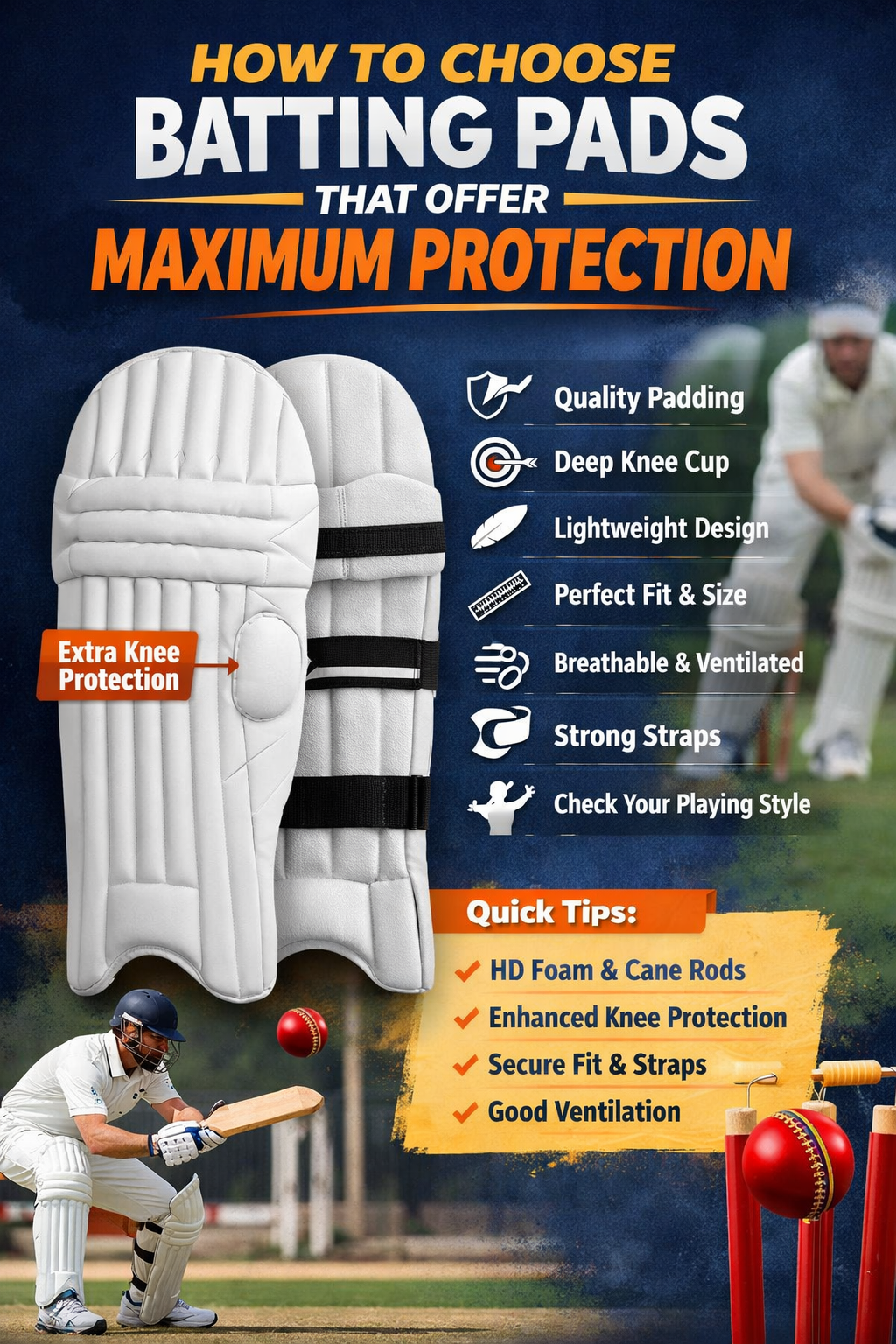
How to Choose Batting Pads That Offer Maximum Protection (USA Guide)
Cricket in the U.S. is growing fast, and with faster bowlers, harder pitches, and competitive leagues, protective gear matters more than ever. Batting pads are your first line of defense against serious injuries—so choosing the right pair isn’t just about comfort, it’s about safety and performance.
Here’s a complete guide to help you pick batting pads that deliver maximum protection without sacrificing mobility.
1. Understand Why Protection Matters
A quality pair of batting pads protects against:
- Fast deliveries impacting the shin and knee
- Repeated stress from long innings
- Unexpected deflections and inside edges
Modern pads use advanced materials to absorb shock and reduce injury risk, making them essential for players at every level.
2. Look for High-Quality Padding Materials
The inner construction of batting pads determines how well they protect you.
Top materials to look for:
- High-density foam (HD foam): Absorbs impact effectively
- Cane rods or reinforced inserts: Provide traditional, solid protection
- Fiber or plastic reinforcement: Adds extra shielding in key areas
Pro tip: Pads that combine foam + cane rods offer the best balance of shock absorption and durability.
3. Focus on Knee Protection
The knee is one of the most vulnerable areas for a batter.
Look for:
- Deep knee cups for full coverage
- Ergonomic design that molds to your knee
- Extra padding around the knee roll
If you face fast bowlers regularly, prioritize pads with enhanced knee protection zones.
4. Balance Protection with Weight
Heavier pads usually provide more protection—but can slow you down.
- Lightweight pads: Better for quick running and T20 formats
- Heavier pads: Ideal for longer formats where protection is critical
Modern brands like Kookaburra, SG, and Gray-Nicolls now offer lightweight pads with high protection, giving you the best of both worlds.
5. Get the Right Size and Fit
Even the best pads won’t protect you if they don’t fit properly.
Check for:
- Pads that cover from ankle to just above the knee
- Straps that secure firmly without cutting circulation
- A snug fit that doesn’t shift while running or playing shots
U.S. players often overlook sizing—always measure your leg before buying.
6. Prioritize Comfort & Ventilation
Long innings can get hot, especially in summer leagues across states like Texas or California.
Choose pads with:
- Breathable mesh lining
- Sweat-absorbing inner materials
- Lightweight construction for airflow
Comfort helps maintain focus—and better focus means better performance.
7. Check Straps and Stability
Pads should stay in place during quick singles and aggressive shots.
Look for:
- Three secure straps (top, middle, bottom)
- Adjustable Velcro closures
- Non-slip inner padding
Loose pads = reduced protection and distraction at the crease.
8. Match Pads to Your Playing Style
Your role and format should influence your choice:
- Aggressive batsmen: Need lightweight, flexible pads
- Defensive/test players: Prefer maximum protection
- All-rounders: Should balance both
If you’re playing on turf wickets with pace bowlers (common in U.S. leagues), always lean toward higher protection models.
Final Thoughts
Choosing the right batting pads isn’t just about brand or price—it’s about fit, materials, and protection level. Investing in high-quality pads ensures:
- Better safety
- Increased confidence at the crease
- Improved overall performance
Whether you're playing club cricket or competitive leagues in the U.S., the right gear can make all the difference.
Quick Checklist
Before buying, make sure your pads have:
✔ High-density foam or cane reinforcement
✔ Strong knee protection
✔ Proper fit and sizing
✔ Lightweight yet durable design
✔ Secure straps and good ventilation