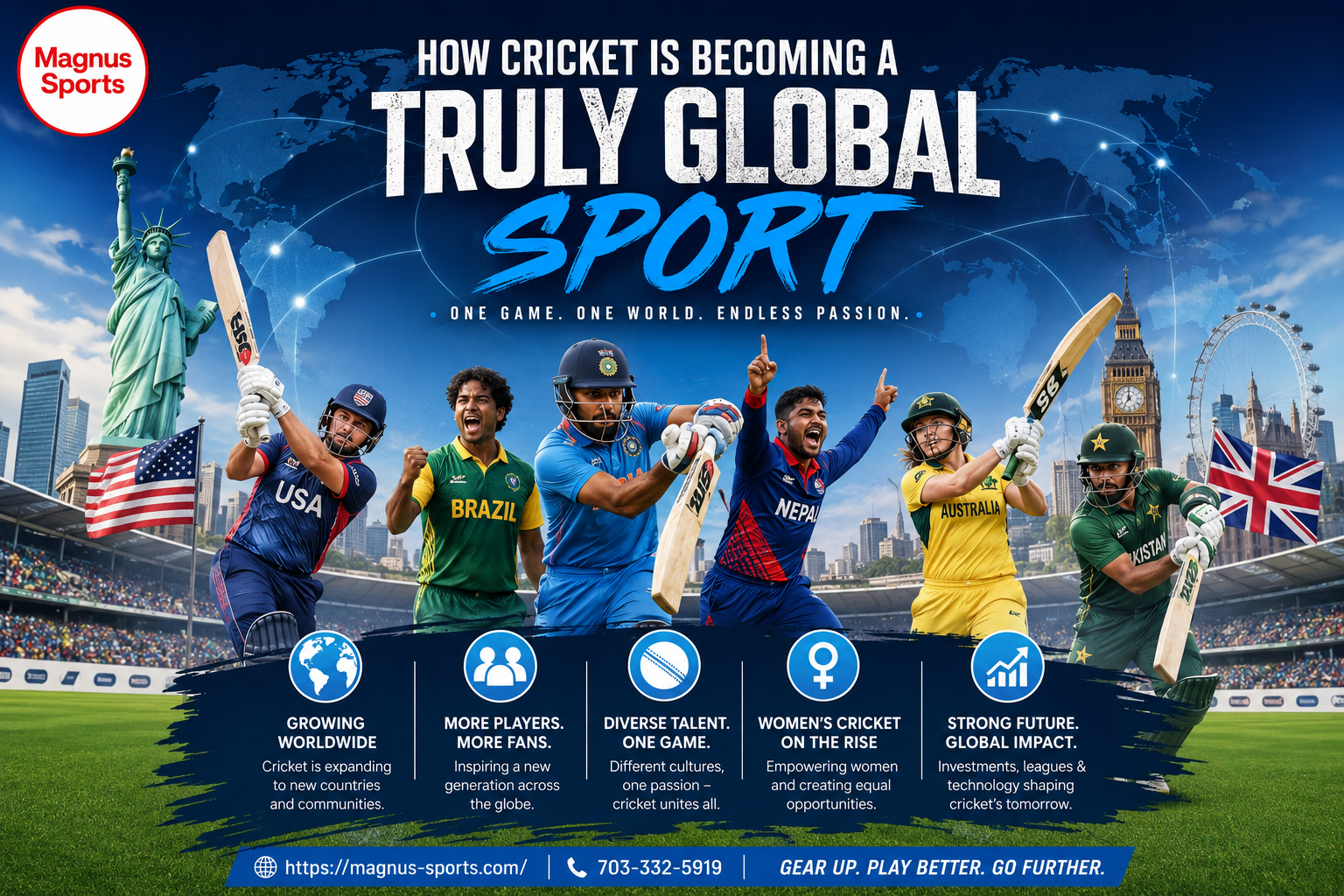
How Cricket Is Becoming a Truly Global Sport
Cricket is no longer a sport associated only with a handful of traditional cricketing nations. From the United States and Brazil to Nepal, Japan, Namibia, and emerging cricket communities across Europe, the game is reaching new audiences and creating new opportunities.
The global cricket landscape is changing rapidly, and the next chapter could be one of the most exciting in the sport's history.
Cricket Is Reaching New Countries
The International Cricket Council (ICC) now has 111 members, including 12 Full Members and 94 Associate Members, demonstrating how widely organized cricket has spread.
The Americas are an excellent example. The ICC lists 17 members in the Americas region, including the USA, Canada, Brazil, Argentina, Mexico, Chile, and several Caribbean nations.
This expansion is important because cricket's future depends not only on established powerhouses but also on developing cricket communities where new players can discover the sport.
The USA Could Transform Cricket's Global Reach
One of the biggest opportunities for cricket is the United States.
The ICC has previously identified the USA as a key new market for targeted cricket growth, with digital development, participation, and Olympic inclusion forming important parts of its global strategy.
The sport is also gaining physical infrastructure in America. In 2026, a new cricket stadium in Pomona, California, hosted its first Major League Cricket home game, while plans for increased seating and a cricket academy point toward greater investment in the American game.
The Los Angeles 2028 Olympics provide another major opportunity. Cricket's return to the Olympic program gives the sport a platform to introduce itself to millions of Americans who may not have grown up watching cricket.
T20 Is Making Cricket Easier to Follow
Traditional Test cricket remains one of the sport's greatest forms, but shorter formats are helping cricket reach new audiences.
T20 cricket offers a faster experience that can fit comfortably into modern entertainment schedules. Franchise leagues, international T20 competitions, and digital platforms are making it easier for fans to watch matches and follow players from around the world.
For new cricket audiences, the shorter format can provide an accessible introduction to batting, bowling, fielding, strategy, and the excitement of the sport.
Women's Cricket Is Driving Global Growth
Another major force behind cricket's expansion is women's cricket.
Participation and visibility are increasing across established and emerging cricket nations. The ICC has also introduced development pathways designed to give emerging women's teams greater opportunities to compete internationally. In 2026, the ICC approved a 10-team Women's Emerging Nations Trophy structure involving both Full and Associate Members.
The growth is already visible at major events. The 2025 Women's Cricket World Cup attracted record attendance for a women's cricket tournament, while the ICC has continued increasing development funding for Associate Members.
More opportunities for girls and women mean more players, coaches, families, and fans becoming part of cricket's future.
Emerging Nations Are Changing the Cricket Story
Perhaps the most exciting development is the rise of teams outside cricket's traditional elite.
Nepal is a powerful example. Its growing fan base, improving domestic structure, and increasing international performances have attracted significant attention. The ICC has invested heavily in Nepal's development, while the Nepal Premier League is helping create a stronger professional cricket ecosystem.
Brazil is another fascinating example. Grassroots programs have helped cricket reach communities that previously had little connection with the sport. The country's development demonstrates how cricket can grow through schools, communities, women's programs, and local coaching rather than relying solely on traditional cricket infrastructure.
These stories show that cricket's next generation of stars could come from places the traditional cricket world never expected.
Technology Is Connecting Cricket Fans
Digital media has removed many of the geographical barriers that once limited cricket's audience.
Fans can now follow international matches, watch highlights, learn from professional players, purchase equipment, and connect with cricket communities from almost anywhere.
The ICC's global strategy specifically identifies digital transformation as an important part of connecting fans with the sport and supporting cricket's growth.
For younger audiences especially, social media, streaming, short-form video, gaming, and data-driven content can make cricket more engaging and accessible.
Better Access to Cricket Equipment Matters
Global growth also depends on making cricket easier to play.
A new player needs access to basic equipment such as a bat, batting pads, gloves, helmet, shoes, and cricket balls. Affordable and accessible cricket equipment can make the difference between someone simply watching the sport and actually becoming a player.
As cricket expands in the USA and other emerging markets, online cricket stores can help players find equipment without needing to live near a traditional cricket center.
Cricket's Future Is More Diverse
The future of cricket will not look exactly like its past.
It will include traditional Test-playing nations alongside emerging teams. It will include men's and women's cricket, professional leagues and grassroots programs, stadium crowds and digital communities.
It will also increasingly include countries where cricket is still a developing sport.
The ICC's continued focus on Associate Members, women's cricket, new markets, development pathways, and Olympic participation shows that global expansion is becoming a central part of cricket's future.
The Global Game Is Just Getting Started
Cricket is becoming global not because one country or one league is driving its expansion, but because thousands of players, coaches, volunteers, families, clubs, and fans are building the game in new places.
From American stadiums to Brazilian communities and Nepalese cricket grounds, the sport is finding new homes.
For cricket fans in the USA, this is an especially exciting time. The combination of professional T20 cricket, grassroots development, women's cricket, digital media, and the 2028 Olympics could introduce the game to an entirely new generation.
Cricket is no longer simply spreading around the world. It is becoming a truly global sport.